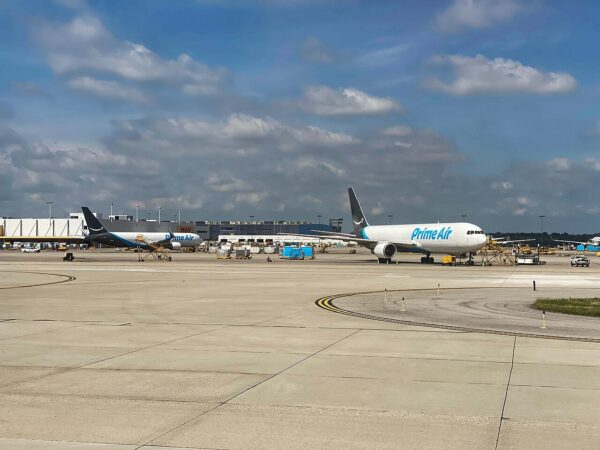
Five people were killed and five others injured Sunday when an Amazon cargo plane overran the runway and crashed at Miami International Airport, prompting U.S. Transportation Secretary Sean Duffy to order an immediate ground stop while investigators assessed the scene.
Miami Mayor Eileen Higgins confirmed the fatalities at a press conference around 5:30 p.m. ET, roughly three hours after the Boeing 767 went down. Fire Chief Ray Jadallah told reporters that three of the injured were in critical condition.
Fox News correspondent Madison Scarpino, reporting from the scene about 90 minutes before the mayor’s briefing, said more than 60 fire trucks had responded to the crash. She described “huge clouds of thick smoke” pouring from the aircraft, which had departed San Juan, Puerto Rico, roughly an hour before it overran the runway in Miami. Scarpino also noted that social media video showed “heavy flames” coming from the plane.
Duffy announced the ground stop about 30 minutes before Scarpino’s report, saying first responders needed time to assess the scene. He urged travelers in the area to brace for significant delays and possible cancellations.
Fox News footage from the scene showed numerous emergency vehicles with lights flashing surrounding the wreckage. Anchor Jon Scott, watching the live coverage, noted that two major highways running past the airport, State Roads 826 and 836, appeared to be shut down, with emergency crews blocking traffic near the runway. The plane reportedly struck several vehicles as it skidded across the ground after overrunning the runway.
Scott went on to interview former FAA representative Kyle Bailey about possible causes of the crash. Bailey pointed to weather as a key factor, noting there were thunderstorms in the area and that the runway was likely wet at the time of landing, which would have extended the aircraft’s necessary braking distance. He explained that if the plane was using maximum braking under those conditions, it would have required significantly more runway to safely stop.
Bailey noted the runway in question stretches roughly 8,500 feet, or about 1.6 miles. He added that heavy winds compounded the hazardous conditions the pilot was contending with, saying the combination of rain and wind “could spell disaster if you’re not really right on your game.”
The investigation into the crash remains ongoing as federal officials work to determine the exact cause of the runway overrun.
[READ MORE: Trump administration drafts plan to pay married stay-at-home parents with child-care subsidies]