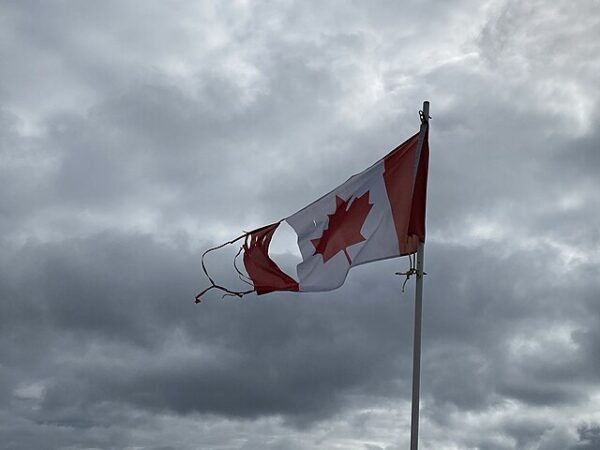
President Donald Trump escalated his trade dispute with Canada on Monday, threatening 50% tariffs on Canadian vehicles, auto parts and steel beginning next year after Prime Minister Mark Carney pledged to retaliate against the latest round of U.S. duties.
In a Truth Social post, Trump said the new tariffs would take effect Jan. 1, 2027.
“Canada has been ripping off the United States of America for years,” Trump wrote. “On Trade, and in other ways, also, they are among the worst Nations in the World to deal with.”
Canada is the third-largest source of U.S. imports, sending more than $380 billion in goods across the border in 2025, according to U.S. Census Bureau data.
Trump’s threat comes days after trade negotiations between Washington and Ottawa collapsed and a broad package of 50% U.S. tariffs on Canadian products took effect Saturday. Carney withdrew Canadian negotiators late Friday, saying the United States “proposed new terms that were uneconomic” and “unfair.”
The tariffs, which took effect at 12:01 a.m. ET Saturday, cover a range of Canadian products, including hockey sticks and building materials, according to NBC News.
“We cannot control the storm blowing in from Washington,” Carney said Saturday. “Canada will match Washington’s new tariffs dollar for dollar in order to protect Canadian workers, farmers, families and businesses.”
U.S. Trade Representative Jamieson Greer sought to play down the immediate economic impact of the new tariffs.
“I think the markets understand that this affects a very small amount of trade,” Greer told CNBC, adding that he would not characterize the dispute as a “trade war.”
Carney used stronger language.
“You’re at war when you get attacked,” he told reporters in Ottawa on Saturday. “We got attacked.”
Carney said Canada had delayed its response until the United States formally imposed the so-called Section 338 tariffs.
Ontario Premier Doug Ford, whose province is Canada’s largest by population, responded to Trump’s latest threat by accusing the president of having “declared war, economic war against his closest friend and ally.”
Ford told the Associated Press that “Everything is on the table” as Canada considers additional retaliation, including restricting electricity exports to the United States and withholding critical minerals.
“I’ll cut them off,” Ford said of the minerals. “You won’t get a grain of sand out of Ontario.”
Carney is preparing retaliatory measures that could remain in place through the rest of Trump’s presidency if necessary, Bloomberg News reported Sunday.
Trump’s announcement left several important details unresolved. It was unclear whether Canadian vehicles and parts that comply with the U.S.-Mexico-Canada Agreement would remain exempt. Canadian-made vehicles that do not comply with the agreement already face a 25% U.S. tariff.
Canadian steel already faces a 50% tariff, raising a separate question about whether Trump’s proposed action would increase the effective rate on those imports to 100%.
Any additional tariffs on automobiles and parts could have an especially significant effect because the auto industries of the United States, Canada and Mexico operate through deeply integrated supply chains. Vehicles and components can cross national borders several times during production.
The escalating dispute also places additional pressure on the future of the USMCA trade agreement. The Trump administration said July 1 that it would not renew the agreement in its existing form, instead moving toward continuing annual reviews and negotiations.
Trump negotiated and signed the USMCA during his first term as a replacement for the North American Free Trade Agreement.