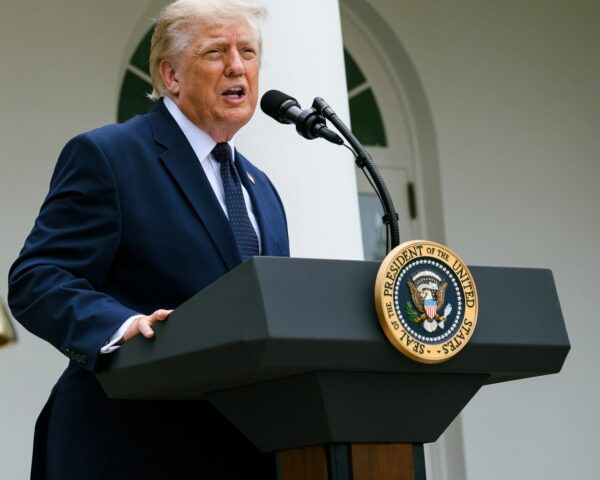
President Donald Trump should adopt a new approach in dealing with Iran, according to conservative commentator Victor Davis Hanson, who argued that continued negotiations with the Islamic Republic are unlikely to produce lasting results.
Hanson shared his assessment Tuesday, just two days after Trump said a new agreement to end the conflict with Iran was “imminent.” The president has said both sides would work toward a deal this week after he decided to cancel what he described as “the biggest attack since World War II” against Iran.
While Hanson praised Trump for carrying out some of his earlier threats to strike Iranian targets, he questioned the effectiveness of repeatedly halting military action whenever Tehran signals a willingness to negotiate.
“It’s not working, because you cannot trust a theocratic government, a radical Islamist government,” Hanson said during his podcast for The Daily Signal. “They’ve lied continuously. They don’t view it as lying; they view it as [being] in service to their religion or ideology.”
According to Hanson, pursuing another round of talks would not achieve the desired outcome. Instead, he argued that the United States should increase military pressure before considering negotiations.
“People feel the time has come to hit the dual-use targeting — the bridges, the power plants if you have to — and inflict a level of damage that disgraces them, humiliates them,” Hanson said.
Hanson outlined what he described as a multi-phase strategy for dealing with Iran. Under his proposal, additional military action would first be used to increase pressure on the regime. Afterward, he suggested the United States could begin reducing the military presence that has been used to help keep the Strait of Hormuz open.
He said that would pave the way for what he described as the second phase of the strategy, which would focus on maintaining economic pressure against Iran rather than relying solely on military operations.
“Keep the embargo, freeze their bank accounts, they’re really hurting, and it would just sort of be turning the burner up to 7 out of 10. And let it simmer,” Hanson said.
He argued that such an approach would reverse what he sees as Iran’s advantage in prolonged negotiations by making time work in favor of the United States instead.
“In other words, what I’m suggesting is, you turn time from a weapon of [Iran’s] to a weapon of ours,” Hanson said.
Trump announced earlier this week that negotiations with Iran would continue after he called off the planned military operation, saying a deal to bring the conflict to an end was close at hand. The president has indicated both sides would work toward reaching an agreement during the week.
Hanson, however, maintained that additional negotiations would be less effective than increasing pressure on the Iranian government before transitioning to sustained economic restrictions.
He argued that continuing sanctions, maintaining the embargo and freezing Iranian financial assets would keep pressure on Tehran over time while allowing the United States to reduce some of its military commitments in the region.
If the administration were to follow the strategy he proposed, Hanson predicted the conflict could be concluded as early as August. He added that such a timeline would allow President Trump to shift his attention away from the conflict overseas and instead focus on helping Republicans during the upcoming midterm elections.
Hanson’s comments offered a different vision for ending the conflict, emphasizing increased military and economic pressure rather than continued negotiations with the Iranian government.
[READ MORE: DOJ Tells Rep. Anna Paulina Luna It ‘Never’ Opened Criminal Probe Into VP Pick Allegations]