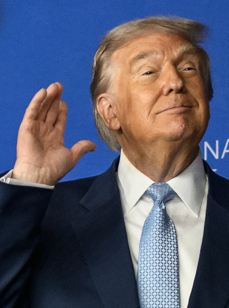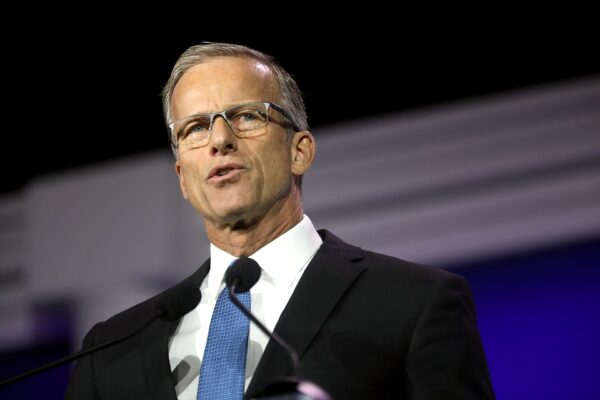
The White House publicly increased pressure on Senate Majority Leader John Thune on Thursday as Republicans struggled to advance President Donald Trump’s sweeping election legislation before Congress leaves Washington for its August recess.
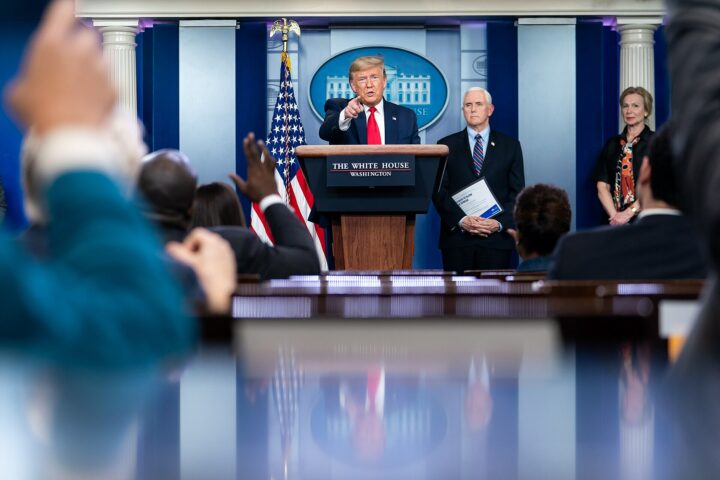
Asked during a White House briefing about Thune and the stalled SAVE America Act, press secretary Karoline Leavitt pointed to Trump’s recent criticism of the Senate.
“Look, the president spoke about this directly yesterday,” she said. “His patience is running out.”
House Republicans have largely supported Trump’s legislative priorities, including proposals requiring voters to provide proof of citizenship and photo identification. The president has also called for significant restrictions on mail-in voting.
In the Senate, however, Thune has repeatedly said Republicans do not have enough votes to move the legislation forward. Trump has urged the South Dakota Republican to eliminate the legislative filibuster, which generally requires most bills to receive 60 votes, but Thune has said there is not enough support within the Republican conference to make that change.
Trump sharpened his criticism during a rally in Georgia on Wednesday.
“The Senate is a place you send things when you want them to die. We’re not going to take this any longer, we’re not going to take it. I’m trying to be nice,” Trump said.
Thune responded Thursday by suggesting that White House officials should take a more direct role in persuading senators to support the legislation.
“Well maybe [Leavitt] or somebody else ought to get on the phone and get the votes, right?” he told reporters. “It’s 50 around here, and so instead of, you know, pointing the finger at Republicans, they might think about going after the people who are stopping it on the floor, which is the Democrats, and if there are Republicans that they think are gettable, get on the phone.”
The exchange exposed growing tension between the White House and Senate Republican leadership over both the election legislation and the procedural obstacles standing in its way.
On Wednesday, the House approved an updated reconciliation bill containing $10 billion in incentives for states to adopt portions of the SAVE America Act. The broader election provisions, however, are not expected to comply with the Senate’s rules governing the budget reconciliation process.
Reconciliation allows certain tax and spending legislation to pass with a simple majority, but provisions considered primarily regulatory or unrelated to the federal budget can be removed by the Senate parliamentarian.
Leavitt said Trump wants Congress to enact as much of the package as possible before lawmakers leave for the summer recess.
“He wants to see as much of the SAVE America passed as possible by the August recess,” she said. “He knows that’s what the American people want to see passed.”
Leavitt also pointed to the response Trump received when he discussed voter identification requirements at Wednesday’s rally.
“The everyday Americans … want proof of citizenship in our elections. The House did its job. The Senate needs to do its job, too.”