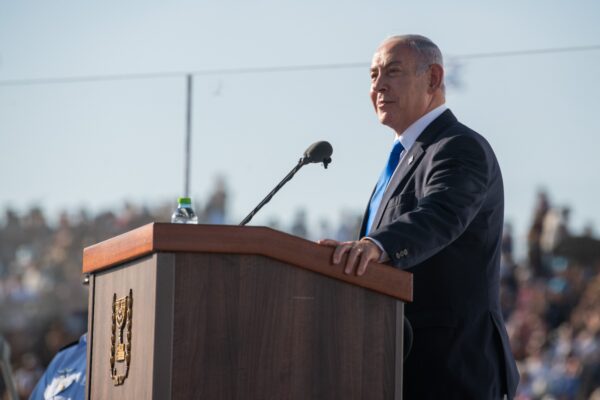
Israeli Prime Minister Benjamin Netanyahu said Tuesday that he has doubts about whether Iran can be persuaded through diplomacy to abandon its nuclear program, while expressing support for President Donald Trump’s efforts to pursue negotiations.
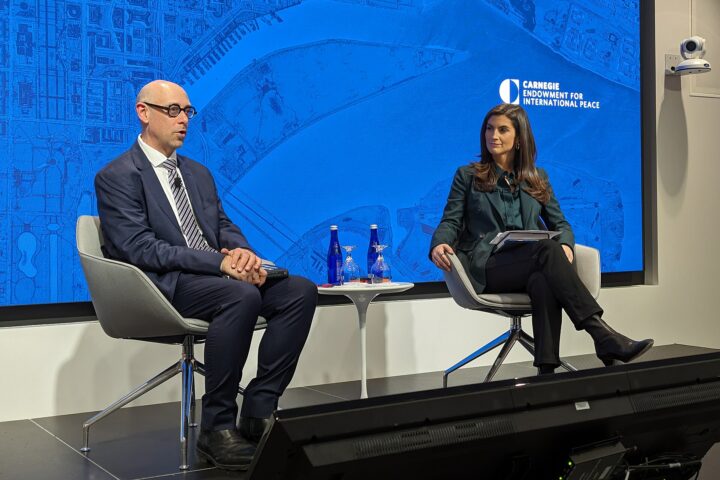
During an interview with CNN anchor Dana Bash, Netanyahu discussed the shifting balance of power in the Middle East, President Trump’s ongoing trip to Turkey, and negotiations involving Iran. Bash also noted that Netanyahu had warned Trump that Turkey is not a friend of the United States before turning the conversation to Iran.
Bash asked Netanyahu whether he believed Trump could successfully convince Iran to give up its nuclear ambitions through diplomacy and pressure.
The Israeli leader responded by saying it was too early to determine how negotiations would ultimately unfold.
“Look, I think it’s too early to say what will happen,” Netanyahu said. “The president believes that he can stop Iran’s nuclear program, which is a nuclear program to create atomic bombs. He believes that he can do this through negotiations and various pressures.”
When Bash interrupted to ask directly whether he shared Trump’s confidence, Netanyahu acknowledged that he remained skeptical.
“Look, I have my doubts, but I think he should be given the chance. And he’s trying to do—to achieve that. And we—it remains to be seen,” he said.
Netanyahu added that regardless of whether negotiations produce an agreement, he remains committed to preventing Iran from obtaining nuclear weapons.
“But I have said, and, by the way, I think President Trump has said too, that deal or no deal, I certainly will not let Iran have nuclear weapons, and that is also the president’s position,” Netanyahu said.
Bash also questioned Netanyahu about the reported memorandum of understanding with Iran. She referenced Trump’s statement that the agreement was “probably an unconditional surrender” while noting that the arrangement would terminate all types of U.S. sanctions against Iran. She asked whether such an outcome would represent a failure for Israel.
Netanyahu declined to characterize it that way, saying the final outcome would depend on the substance of any eventual agreement.
Bash then recalled Netanyahu’s 2015 address to Congress opposing the Iran nuclear deal known as the JCPOA, asking what had changed since he criticized sanctions relief at that time.
In response, Netanyahu argued that joint actions by the United States and Israel had significantly damaged Iran’s infrastructure.
“I think our combined action, the U.S. and Israeli action today, destroyed—I think the lowest estimates are $400 billion—of the regime’s infrastructure, and some say as much as three-quarters of a trillion dollars or even a trillion dollars,” he said.
Because of that, Netanyahu said the financial figures currently being discussed were comparatively small, though he acknowledged that any sanctions relief would still be viewed as significant by Israel and others.
He said the key issue is whether any final agreement would accomplish its primary objectives, including ending Iran’s nuclear program, removing enriched nuclear material, dismantling enrichment sites, and addressing proxy warfare and ballistic missiles.
Netanyahu said that if those goals are achieved, Iran would receive sanctions relief that could help the regime recover. However, he emphasized that he does not believe that point has been reached.
“I don’t see that happening yet,” Netanyahu said. “And I hope that the president will do exactly as he promised to do, to make sure that Iran does not have a nuclear weapons program.”
[READ MORE: Sunny Hostin Says American Flags Can Make Her Feel ‘Unsafe’ During ‘The View’ Discussion]