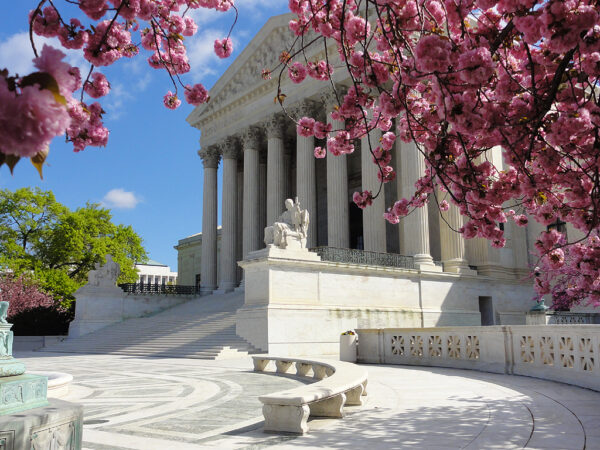
The Supreme Court on Tuesday declined to hear a legal challenge brought by the state of Florida against California and Washington over how the two Democrat-led states issue commercial driver’s licenses, leaving unresolved a growing debate over immigration enforcement, highway safety, and the limits of state authority.
Florida’s lawsuit centered on accusations that California and Washington were improperly issuing commercial driver’s licenses, commonly known as CDLs, to individuals lacking legal immigration status or sufficient English proficiency. Federal law bars commercial licenses from being issued to drivers who are not proficient in English.
The case arrived before the nation’s highest court after Florida chose to sue the two states directly, a rare legal maneuver permitted because disputes between states fall under the Supreme Court’s original jurisdiction.
The justices ultimately refused to take up the case, though conservative Justices Clarence Thomas and Samuel Alito dissented from the decision.
Thomas argued the Constitution leaves the court with an obligation to hear disputes between states rather than simply declining involvement.
“By entering the Union, States agree to instead have such disputes resolved by this Court,” Thomas wrote in his dissent, echoing a position he and Alito have advanced in previous cases involving conflicts between states.
Florida’s legal challenge emerged amid mounting concern over several fatal trucking crashes involving drivers who were reportedly in the country illegally. Among those incidents was an October crash in California that killed three people.
Florida argued those tragedies demonstrated why commercial licensing standards matter beyond state borders. Because truck drivers routinely cross state lines, the lawsuit contended that policies in California and Washington could endanger residents far outside their own jurisdictions.
“California’s and Washington’s decision to endanger their own citizens is reprehensible,” Florida wrote in its filing. “But commercial drivers routinely cross state lines, endangering citizens of other States.”
Florida Attorney General James Uthmeier, who is spearheading the lawsuit, argued the licensing practices in the two states are preempted by federal law and rise to the level of a public nuisance.
The dispute quickly became part of the broader national divide between Republican-led states pushing for stricter immigration enforcement and Democrat-led states defending policies they say remain lawful and properly administered.
California strongly rejected Florida’s accusations, calling the claims “patently meritless” and arguing the lawsuit fundamentally misunderstood state law. Washington similarly denied that it was issuing CDLs unlawfully or ignoring federal English-language requirements.
Washington also urged the court not to expand the scope of interstate legal battles into politically charged policy disputes.
In court filings, the state warned that allowing the lawsuit to proceed could open the door for states to sue one another over nearly any controversial policy disagreement.
“Can States bring nuisance claims against each other in this Court alleging that lax vaccination policies or firearm restrictions in one state are causing harm in another?” Washington asked. “The Court should not open that door.”
The court’s refusal to hear the dispute leaves the underlying arguments unsettled while highlighting the increasingly bitter clashes between states over immigration, public safety, and federal authority. At the same time, the case underscored another uncomfortable reality: when governments fail to establish clear national standards and consistent enforcement, Americans are often left arguing state by state over issues that ultimately affect the entire country.
[READ MORE: Trump Approves Emergency Aid as California Battles Toxic Chemical Threat in Orange County]