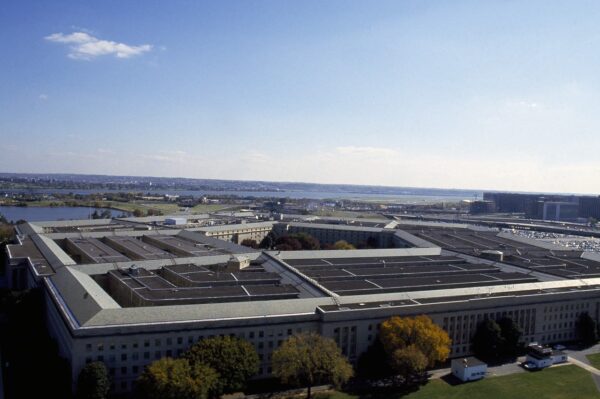
The Pentagon has removed the name of former Director of National Intelligence James Clapper from an auditorium at the Defense Intelligence Agency headquarters, replacing it with the name of a Revolutionary War intelligence pioneer in a move officials say is intended to honor the origins of America’s military intelligence community.
The Department of Defense recently renamed the “Clapper Leadership Hall” at Joint Base Anacostia-Bolling in Washington, D.C., to the “Thomas Knowlton Leadership Hall,” according to a Pentagon official. The change took place this month at the headquarters of the Defense Intelligence Agency, which first opened at the installation in 1983.
Thomas Knowlton is widely regarded as the nation’s first intelligence professional. During the Revolutionary War, General George Washington selected Knowlton in 1776 to organize Knowlton’s Rangers, America’s first structured military intelligence unit. The group was tasked with conducting reconnaissance missions and gathering critical intelligence behind enemy lines during the nation’s fight for independence.
Acting Pentagon Press Secretary Joel Valdez said the renaming was meant to recognize Knowlton’s lasting contribution to the country’s intelligence history.
“The Thomas Knowlton Leadership Hall at Defense Intelligence Agency (DIA) headquarters honors a true American warrior whose legacy is inseparable from the birth of our nation’s intelligence profession,” Valdez said in a statement to The Hill.
Valdez noted that Knowlton’s Rangers became America’s first organized military intelligence unit and emphasized the importance of their reconnaissance and intelligence-gathering missions.
“We are excited to have his name as a permanent fixture at the DIA,” Valdez added.
The removal of Clapper’s name from the auditorium was first reported by The Daily Caller.
Clapper, who resigned as Director of National Intelligence in 2016, has remained a frequent critic of President Donald Trump, repeatedly criticizing the president’s handling of defense, national security and foreign policy since Trump’s first term in office. Trump, in turn, has regularly criticized Clapper, portraying him as part of what he has described as a deep state network opposed to his presidency.
Clapper has also faced criticism over his congressional testimony. Critics have accused the former intelligence chief of lying to Congress under oath, though Clapper has maintained that he has never lied while testifying before lawmakers. He was also questioned by Sen. Ron Wyden, D-Ore., during a 2013 hearing regarding covert surveillance directed at the American public.
The latest renaming follows other instances in which honors associated with political figures have been removed or relocated. Trump has previously moved paintings and other displays recognizing political figures with whom he disagreed, including portraits of former Presidents Barack Obama and George W. Bush at the White House.
Similarly, the portrait of retired Gen. Mark Milley, the former chairman of the Joint Chiefs of Staff and an outspoken critic of the president, was removed from the Pentagon in January of last year.
Pentagon officials, however, said the decision to rename the leadership hall was centered on honoring Thomas Knowlton and his foundational role in establishing America’s military intelligence tradition.
[READ MORE: Wisconsin Socialist Candidate Pressed on Past Calls to Abolish Police During Debate Exchange]