The Centers for Disease Control and Prevention moved aggressively to tighten America’s public health defenses Monday as officials responded to a worsening Ebola outbreak in Central Africa, announcing new travel restrictions targeting foreign nationals who recently visited several affected countries.
Under the order, foreign passport holders will be barred from entering the United States if they have been in Uganda, Democratic Republic of the Congo, or South Sudan within the previous 21 days.
The CDC said it is invoking Title 42, a public health authority that allows the agency’s director to suspend the entry of noncitizens into the country for up to 30 days when necessary to protect public health.
The restrictions do not apply to American citizens, members of the military, or individuals specifically exempted by the Department of Homeland Security.
“At this time, CDC assesses the immediate risk to the general U.S. public as low,” the agency said in a statement, while also warning that officials would continue monitoring the situation and could modify public health measures as conditions evolve.
The order was signed by Jay Bhattacharya, who is also currently serving as head of the CDC.
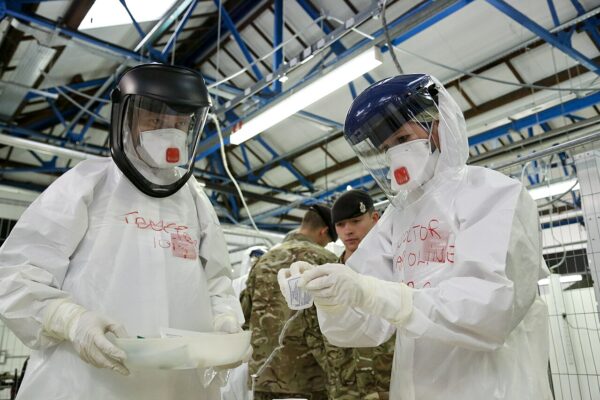
Federal health officials said they are also increasing screening procedures at airports and other entry points while coordinating with airlines, international partners, and port authorities in an effort to identify travelers who may have been exposed to the virus before entering the country.
The action follows a declaration by the World Health Organization that the ongoing Ebola outbreak constitutes a public health emergency of international concern. According to the article, more than 330 suspected cases and 88 deaths have already been reported.
Health authorities said the current outbreak involves the Bundibugyo strain of Ebola, a virus for which there is currently no vaccine. The CDC noted that the strain carries a fatality rate between 25 and 50 percent, while available treatment is limited to supportive care.
Officials said Ebola’s incubation period typically lasts between two and 21 days, with most infected individuals developing symptoms within four to 10 days after exposure. Importantly, the CDC stated that infected individuals do not spread the virus until symptoms begin.
The agency urged anyone who recently traveled through affected regions to seek immediate medical attention if they experience symptoms such as fever, weakness, vomiting, diarrhea, or unexplained bleeding within 21 days of travel.
According to the order, the outbreak is centered in Ituri Province in eastern Congo, where officials say conflict, fragile health infrastructure, and porous regional borders have complicated containment efforts.
Although South Sudan has not yet confirmed cases tied to the outbreak, the CDC said the country remains at elevated risk because of its close proximity to affected areas.
Federal officials also warned about the challenges posed by modern international travel, particularly the difficulty of identifying infected individuals moving through multiple countries before symptoms emerge.
“There is a risk that the outbreak could spread beyond these three countries, and ultimately reach the United States,” the order stated, citing the possibility of infected travelers unknowingly exposing others while still asymptomatic.
The CDC further warned that “complex multi-leg itineraries and the rapid pace of international travel create substantial challenges” for identifying potentially infected travelers before arrival in the United States.
While officials emphasized the immediate risk to Americans remains low, the move reflects growing concern inside public health agencies that global instability, weak infrastructure overseas, and fast-moving international travel networks can quickly transform regional outbreaks into broader international threats.
At the same time, the situation underscores how crises abroad — whether military conflicts or public health emergencies — increasingly carry consequences that can reach American shores with little warning.
[READ MORE: Trump Escalates Feud With Thomas Massie After Cassidy Primary Shakeup]