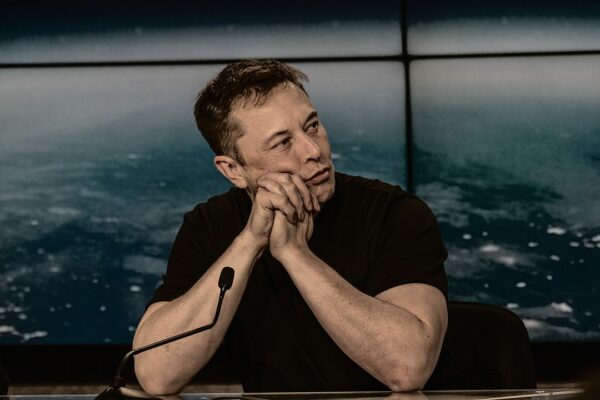
A California jury ruled against Elon Musk on Monday, rejecting his lawsuit accusing Sam Altman and OpenAI leadership of abandoning the company’s original nonprofit mission in pursuit of massive corporate profits.
The decision, handed down in federal court in Oakland after roughly two hours of deliberation, marked a major setback for Musk in his long-running dispute with the artificial intelligence company he helped launch nearly a decade ago.
U.S. District Judge Yvonne Gonzalez Rogers accepted the unanimous verdict and stated there was “substantial evidence to support the jury’s finding,” according to CNBC.
Musk co-founded OpenAI in 2015 alongside Altman and others, originally presenting the organization as a nonprofit venture intended to develop artificial intelligence in a way that would broadly benefit humanity. But Musk left the company in 2018 following disagreements over its direction and leadership.
Years later, after OpenAI’s explosive rise through products like ChatGPT, Musk filed suit in 2024 against Altman and OpenAI President Greg Brockman, arguing they had betrayed the organization’s founding purpose by converting it into a profit-driven enterprise closely aligned with corporate interests.
The lawsuit sought sweeping remedies. Musk wanted Altman and Brockman removed from leadership positions and also asked the court to force OpenAI and Microsoft to return as much as $134 billion in what he described as “ill-gotten gains,” according to CNBC.
At the heart of the case was Musk’s contention that OpenAI had drifted far from the open, nonprofit model originally promoted to the public. In 2024, he famously mocked the company by suggesting it should rename itself “ClosedAI,” a jab at what he viewed as its increasingly secretive and commercial approach.
“You can’t just convert a non-profit into a for-profit,” Musk wrote on X that same year. “That is illegal.”
Attorneys for OpenAI pushed back aggressively during the trial. According to CNN, the company’s lawyers argued Musk delayed filing the lawsuit until after he launched his own rival artificial intelligence company, xAI.
The jury ultimately sided with OpenAI’s argument, finding that Musk had been aware of the company practices cited in the lawsuit as early as 2021.
Monday’s ruling brings an end to a closely watched three-week trial that highlighted not only the bitter personal feud between Silicon Valley power players, but also the growing tensions surrounding the future of artificial intelligence itself.
Musk has long expressed mixed views about AI development. While aggressively promoting Grok, the AI model integrated into X, the social media platform he owns, he has simultaneously warned about the potential dangers posed by rapidly advancing artificial intelligence technologies.
Speaking with Tucker Carlson in 2023, Musk cautioned that AI could become far more dangerous than failures in industries like aviation or automobile manufacturing.
“AI is more dangerous than, say, mismanaged aircraft design or production maintenance or bad car production,” Musk said at the time.
He added that artificial intelligence carries what he described as a “non-trivial” possibility of “civilization destruction” if developed irresponsibly.
The case underscored a broader debate now unfolding across politics, business, and technology: whether artificial intelligence should remain guided primarily by public-minded safeguards or increasingly shaped by the pressures of competition, profit, and geopolitical rivalry. Even as companies race to dominate the AI industry, concerns continue mounting over how quickly the technology is advancing — and whether society is fully prepared for the consequences.
[READ MORE: Trump Escalates Feud With Thomas Massie After Cassidy Primary Shakeup]