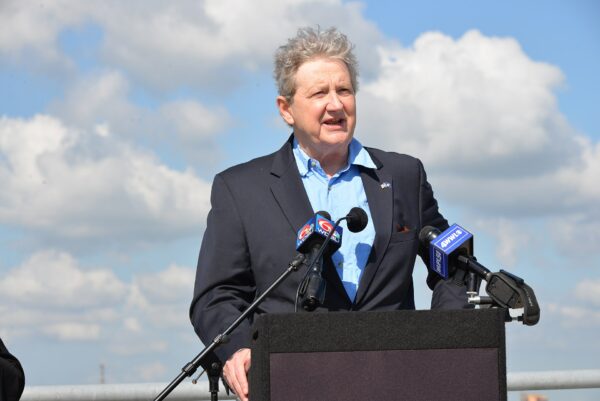
Sen. John Kennedy reportedly put Federal Reserve chair nominee Kevin Warsh on the spot Tuesday, pressing him to clarify whether he had made any commitments to Donald Trump regarding interest rates—a question that cuts to the heart of concerns about political influence over the nation’s central bank.
During a Senate Banking Committee confirmation hearing, Kennedy, a close ally of Trump, raised a concern that has lingered for months: the president’s repeated public insistence that any Fed chair he appoints should be willing to lower interest rates. The senator framed the issue bluntly, asking whether Warsh had agreed to follow through on that expectation.
Warsh pushed back, emphasizing that no such promise had been made and that he would act independently if confirmed. He stated clearly that Trump had never asked him to “predetermine, commit, fix, or decide” on any interest rate decision, adding that he would not agree to such a request even if it had been made.
The exchange highlighted a broader tension that has been building as Trump has publicly criticized current Federal Reserve Chair Jerome Powell for resisting calls to lower rates. While the president has been vocal, the Fed operates under a structure designed to insulate monetary policy from political pressure. Interest rates are not set unilaterally by the chair but are determined by a vote of the Federal Open Market Committee, a process intended to maintain stability and credibility in financial markets.
Kennedy’s questioning took a colorful turn as he invoked the idea of a “human sock puppet,” pressing Warsh on whether he would act as an extension of presidential will. Warsh rejected the notion outright, stating he would be “an independent actor” and not beholden to any individual.
The senator also raised concerns about financial ethics and potential conflicts of interest, noting that Warsh had agreed to divest certain assets as part of his ethics obligations. Warsh confirmed that he would comply, acknowledging that failure to do so would violate his agreement.
At the same time, Kennedy underscored the importance of credibility for the Fed chair, suggesting it is the most critical asset for guiding economic policy. Warsh agreed, reinforcing the idea that trust in the institution is essential for effective decision-making.
The hearing comes amid ongoing unease within financial circles, where Trump’s persistent criticism of Powell—and the prospect of a more politically aligned successor—has sparked concern about the potential erosion of the Fed’s independence. Observers have warned that such pressures could shake confidence in the U.S. economy, particularly at a time when global markets are closely watching American monetary policy.
Adding another layer to the discussion, Kennedy questioned Warsh about his views on artificial intelligence and its potential impact on productivity and inflation. Warsh described the current moment as highly disruptive, noting that AI could have significant short- and long-term effects on the economy, though he resisted simplifying its impact on inflation or rate decisions.
As the confirmation process moves forward, the exchange between Kennedy and Warsh serves as a reminder of the delicate balance between political leadership and economic stewardship. While elected officials may voice strong opinions on interest rates, the long-term health of the economy often depends on decisions made outside the heat of political demands—a reality that continues to test both policymakers and those entrusted with guiding the nation’s financial future.
[READ MORE: Trump Blasts Media Coverage as Debate Grows Over Iran Uranium Strategy]