The Trump administration announced Thursday that it is winding down a sweeping immigration enforcement initiative in Minneapolis, bringing to a close a months-long federal surge that reshaped law enforcement operations across the Twin Cities and ignited sharp political debate in Minnesota.
The effort, known as Operation Metro Surge, began in late November and sent more than 3,000 federal immigration personnel into a city of roughly 250,000 residents that previously had about 150 federal immigration authorities on the ground. According to the Department of Homeland Security, the operation resulted in the apprehension of more than 4,000 undocumented immigrants.
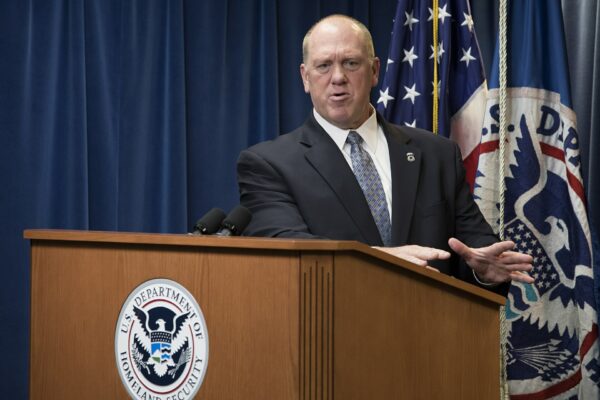
At a news conference in Minneapolis, Border Czar Tom Homan said he had recommended ending the surge and that President Trump agreed.
“I have proposed and President Trump has concurred that this surge operation conclude,” Homan said.
BREAKING: HOMAN announces that he and Trump have agreed to end ICE's 'Operation Metro Surge' In Minnesota
ICE will still have a "footprint" in the Twin Cities that will include teams to prioritize arresting criminal illegal immigrants and violent agitators pic.twitter.com/DOzHmoXbJk
— Jennie Taer (@JennieSTaer) February 12, 2026
Homan attributed the decision to improved coordination with local law enforcement and what he characterized as the overall success of the enforcement campaign. A significant reduction in personnel—described by Homan as “a significant drawdown”—is already underway and will continue into next week. He said he plans to remain in the area “for a little longer” to oversee the transition and ensure it proceeds smoothly.
Even as the surge winds down, Homan made clear that federal immigration enforcement will continue.
“If you’re in this country illegally, you’re not off the table,” he said.
Homan emphasized that ICE agents did not conduct arrests in churches or schools during the operation, though he added such locations are “not off the table.” He also pledged “zero tolerance” for interference with federal law enforcement, while affirming support for lawful First Amendment activity. “This is not the way to express your disagreement or try to reform federal laws,” Homan said, urging critics to take their concerns to lawmakers.
The operation unfolded amid intense controversy. Federal authorities shot and killed two U.S. citizens in separate incidents during the surge: Renee Good, a 37-year-old mother of young children, and Alex Pretti, a 37-year-old ICU nurse at a local Veterans Affairs hospital. The shootings sparked widespread protests and renewed scrutiny of the administration’s immigration strategy.
Homan addressed the incidents directly.
“I don’t want to see any more bloodshed. I pray every night for the safety of law enforcement personnel and the safety of those in the community, whether you’re here legally or illegally. I don’t want to see anybody harmed,” he said.
He also acknowledged operational shortcomings, suggesting that the president dispatched him to Minneapolis to correct deficiencies in the execution of the mission.
“As I said in my first press conference a couple weeks ago, President Trump didn’t send me here because operations were being run and conducted perfectly,” Homan said. “I came here to identify issues and implement solutions to improve our mission execution.”
During the course of the surge, more than 200 individuals were arrested for impeding federal officers.
Homan pointed to what he described as improved access to county jails for apprehending immigration targets as a key development that made the drawdown possible. Earlier this month, the administration began scaling back the operation by sending home about 700 agents.
Operation Metro Surge faced opposition from local leaders in Minnesota, a Democratic-led state, reflecting broader national tensions over immigration enforcement under President Trump. Homan characterized the effort as a targeted public safety initiative that strengthened security in the Twin Cities, even as critics argued it strained community trust and raised civil liberties concerns.
With the surge ending, the administration now shifts to what officials describe as a more sustainable enforcement posture, one that maintains federal presence in Minneapolis while reducing the extraordinary footprint that defined the past several months.
[Read More: Megyn Kelly Goes After Super Bowl Halftime Show]