By the end of 2025, the United States recorded what appears to be the largest single-year decline in homicides ever measured, according to preliminary nationwide data — a dramatic turnaround that analysts say coincided with a renewed emphasis on tough, federal-led crime enforcement.
Early figures compiled from more than 550 law enforcement agencies show murders fell by roughly 20 percent compared with 2024, eclipsing any previous year-over-year decrease on record. While final federal crime statistics have not yet been released, experts say the magnitude of the drop is unprecedented in the modern era of American crime reporting.
The national improvement came as Washington shifted decisively toward more aggressive intervention, particularly in jurisdictions that have long struggled with violence. Even with the encouraging trend, violent crime remains heavily concentrated in major metropolitan areas — many of them run by Democrats — where crime levels have historically been among the highest in the country.
Data cited by the Major Cities Chiefs Association show that during the first half of 2025 alone, approximately 2,800 homicides were committed in major U.S. cities. Some of the most notorious hot spots are seeing progress, but those gains come after years of extreme violence. Chicago, for example, has posted a 30 percent drop in homicides this year, but only after a prolonged period of bloodshed that peaked in 2021.
Other Democrat-led cities have bucked the national trend entirely. Atlanta, Columbus, and Philadelphia reported increases in categories such as rape, robbery, or aggravated assault, underscoring how volatile public safety remains in certain urban centers despite overall national gains.
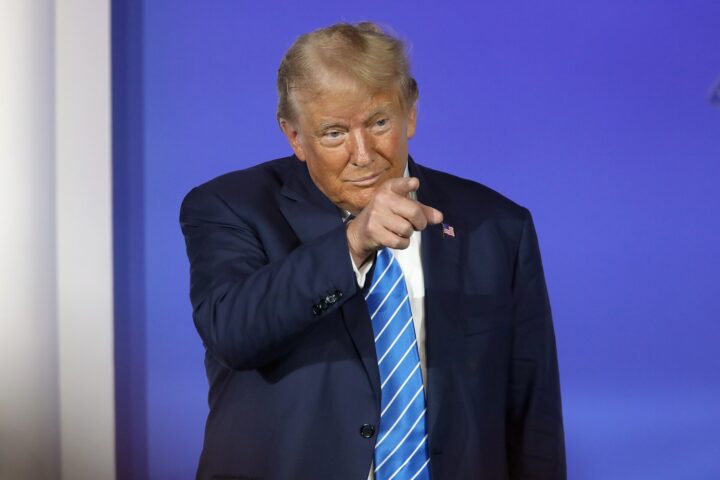
President Donald Trump moved quickly after taking office in January 2025 to make public safety a top priority, rolling out a series of executive actions aimed at reversing years of what critics called soft-on-crime policies. The administration restored the federal death penalty for those who murder law enforcement officers and reinstated the 1033 Program, giving local police broad access to surplus military equipment to better confront heavily armed criminals.
In addition, the White House established Homeland Security Task Forces in all 50 states, focusing on dismantling gangs and drug trafficking networks that fuel violent crime. Supporters of the strategy argue the coordinated federal-state approach sent a clear message that Washington would no longer tolerate lawlessness in America’s cities.
One of the most visible steps came in August 2025, when the president declared a “crime emergency” in Washington, D.C. Federal agents and National Guard troops were deployed to support local police, effectively stabilizing the capital after years of rising violence. Local officials have credited the federal presence as a “force multiplier,” noting that the city reached its lowest homicide total in eight years following the intervention.
The administration paired these tactical surges with its broader “Ending Crime and Disorder” initiative, which targets drivers of urban instability such as open-air drug use and entrenched gang activity. The goal, officials say, is not just to suppress crime temporarily but to establish a consistent national standard for public safety.
As 2025 comes to a close, the historic drop in homicides is being cited by supporters as evidence that a firm law-and-order approach can deliver results. While challenges remain — particularly in cities that continue to resist federal involvement — the scale of the decline suggests the country may be witnessing not a statistical fluke, but a genuine restoration of safety driven by decisive leadership and enforcement.
[READ MORE: Trump Unloads on Clooney Over Politics, Citizenship Move, and Media Attacks]