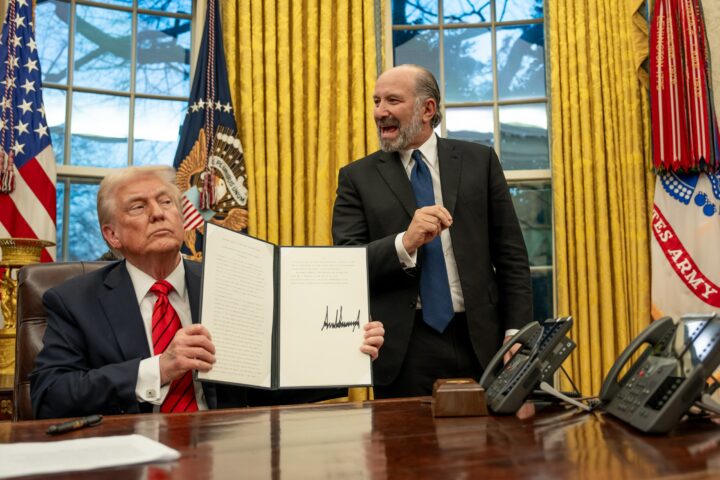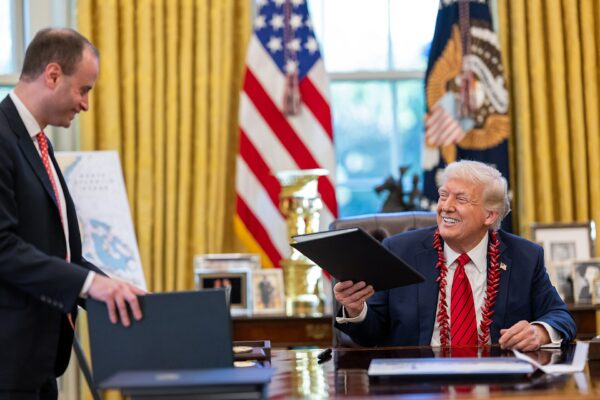
President Donald Trump signed an executive order Thursday reclassifying marijuana from a Schedule I drug to a Schedule III controlled substance, marking a significant shift in federal policy while stopping short of fully legalizing the drug.
Under the U.S. Controlled Substances Act, Schedule I substances are defined as having a high potential for abuse and no accepted medical use in the United States. Drugs in that category include heroin, LSD, and MDMA. By moving marijuana to Schedule III, the Trump administration formally recognized that the drug has “legitimate medical uses,” a change the president said has been long requested by patients suffering from serious illnesses.
Trump announced the decision from the Oval Office, emphasizing the volume of appeals he has received from Americans seeking relief. “We have people begging for me to do this,” the president said. “People that are in great pain.”
He said the issue has been raised for decades by patients dealing with extreme pain and debilitating conditions. Trump listed those suffering from incurable diseases, aggressive cancers, seizure disorders, neurological problems, veterans with service-related injuries, and older Americans facing chronic medical issues that severely reduce quality of life.
“For decades, this action has been requested by American patients,” Trump said. He added that the push for reclassification has been overwhelmingly one-sided. “I think I probably have received more phone calls on this, on doing what we’re doing. I don’t think I received any calls on the other side of it.”
Also present for the signing were Health and Human Services Secretary Robert F. Kennedy Jr. and Dr. Mehmet Oz, who oversees Medicare and Medicaid. Both officials framed the move as a way to bring clarity and scientific rigor to an area long clouded by regulatory barriers.
Kennedy said the change would finally allow meaningful research that has been blocked under the previous classification. He acknowledged concerns about marijuana’s potential risks, including addiction, psychosis, and negative public health effects, especially for young people.
“There are valid claims about the negative impacts of addiction, about psychosis, about adverse public health impacts,” Kennedy said. He argued that those claims have remained largely theoretical because researchers have been unable to conduct standardized scientific studies. Under Schedule I, marijuana could not be studied with consistent dosing or clear distinctions between different forms.
“There is no standardized dosing,” Kennedy said, explaining that without it, studies compare “apples to pears.” He added that researchers have lacked the ability to distinguish between botanical and synthetic forms of the drug. “All these questions we can now answer,” he said.
The move drew mixed reactions within the Republican Party. While Trump framed the decision as compassionate and medically focused, some GOP lawmakers voiced strong opposition.
Sen. Ted Budd of North Carolina criticized the reclassification in a post on X, warning that expanding the marijuana industry poses risks. “Growing the marijuana industry endangers the health and safety of Americans,” Budd wrote. “The only winners from rescheduling will be bad actors like Communist China and drug traffickers.”
Budd said he led a letter signed by 22 senators raising concerns about marijuana rescheduling. Other signers included Sen. Tom Cotton of Arkansas, Sen. John Barrasso of Wyoming, and Sen. Shelley Moore Capito of West Virginia.
Despite the internal debate, Trump made clear that the order reflects what he views as a measured approach — acknowledging medical realities without embracing full legalization. The reclassification signals a major policy change while keeping marijuana regulated under federal law, a balance the president said responds directly to Americans in pain without ignoring public health concerns.