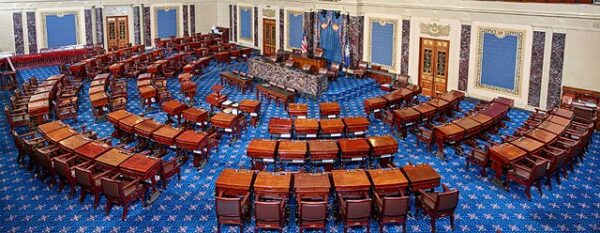
Senate Republicans on Thursday reportedly blocked a Democrat-drafted bill that would have extended enhanced Obamacare insurance subsidies through 2028, rejecting what they described as another costly, temporary patch that ignores the deeper structural problems driving health care costs higher. The vote — 51 to 48 — fell well short of the 60 votes needed to advance the legislation.
Four Republicans broke ranks and voted with Democrats: Sens. Susan Collins and Lisa Murkowski, who have long supported preserving Obamacare subsidies; Sen. Dan Sullivan, who faces reelection next year; and Sen. Josh Hawley. The unusual vote on a Democratic health care bill came as part of a deal struck by Senate Majority Leader John Thune with centrist Democrats to end the 43-day government shutdown.
Democratic Leader Chuck Schumer described his plan as a simple extension of the pandemic-era tax credits. He warned that next year’s premiums would “shoot through the roof” without immediate action and said this vote was “the last train to leave the station.” The subsidies, first enacted during COVID-19, are set to expire at the end of 2025. Democrats argued the extension would prevent average premiums on the Affordable Care Act marketplace from rising by an estimated 26 percent in 2026.
But Republicans countered that Democrats were once again refusing to address the underlying failures of Obamacare — spiraling premiums, lavish subsidies to insurance companies, and no accountability for high-income households routinely receiving federal tax credits. Thune criticized Democrats for pushing a three-year extension “with no reforms” and accused them of trying to disguise “the real impact of ObamaCare’s spiraling costs.”
Republicans also offered a competing proposal — led by Sens. Bill Cassidy and Mike Crapo — that would have redirected subsidy money into consumers’ health savings accounts to help pay out-of-pocket costs. Cassidy argued that Democrats’ approach sends “100 percent of the money to the insurance companies,” which are legally permitted under Obamacare to take 20 percent of subsidies as overhead and profit. Democrats blocked the GOP plan earlier in the day.
With both measures failing, lawmakers are unlikely to revisit the issue until 2025. Some centrists nevertheless expressed hope that the collapse of both bills could force genuine bipartisan negotiations instead of political messaging votes.
Democrats, meanwhile, made clear they intend to weaponize the vote in next year’s elections. Schumer warned that “the American people will not forget” which senators opposed extending subsidies. Sen. Jeanne Shaheen said millions of families will face a “crushing financial blow” without an extension and blamed Republicans for refusing to agree to a deal.
Republicans pushed back, arguing that Democrats refuse to acknowledge that Obamacare itself is the problem — not the lack of subsidies papering over its cost increases.
For now, health care remains one of the biggest unresolved battles ahead of the 2026 midterms, with no clear path forward after both parties’ plans collapsed on the Senate floor.