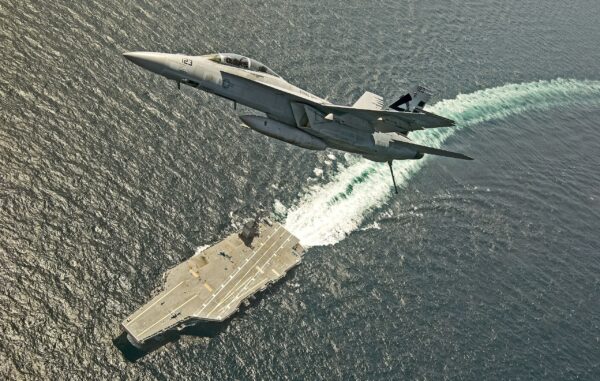
Energy Secretary Chris Wright said Thursday that the U.S. Navy is not yet prepared to escort oil tankers through the Strait of Hormuz, though he suggested such a move could become reality in the near future as the conflict with Iran continues to ripple across global energy markets.
Speaking during an interview on CNBC’s Squawk Box, Wright acknowledged that the administration has considered the possibility but said the military is currently focused elsewhere.
“It will happen relatively soon, but it can’t happen now. We’re simply not ready,” Wright said.
According to the energy secretary, U.S. forces remain concentrated on striking Iran’s military capabilities and the infrastructure behind them, rather than diverting resources to protecting commercial shipping lanes.
“All of our military assets right now are focused on destroying Iran’s offensive capabilities and the manufacturing industry that supplies their offensive capabilities,” Wright explained. “We don’t want this to be a brush off for a year or two. We want to permanently destroy their ability to build missiles, to build drones, to have a nuclear program.”
Still, Wright signaled that escort operations could begin relatively soon. Asked whether the timeline could fall within the next month, he indicated that was likely.
“I think that is quite likely the case,” Wright said. “I’ll be over at the Pentagon later today…that is what the military is working on.”
The possibility of naval escorts comes as tensions in the Middle East continue to rattle global markets. The Strait of Hormuz, a narrow but critical waterway through which a significant portion of the world’s oil supply passes, has become a flashpoint as attacks on vessels attempting to transit the strait have disrupted the flow of crude.
The instability has sent oil prices climbing sharply. As of Thursday morning, Brent crude, the international benchmark, was approaching $100 per barrel. Iranian officials have warned that prices could surge even higher if their blockade continues, suggesting the possibility of oil reaching $200 per barrel.
Wright downplayed those predictions in a separate interview with CNN, arguing that the global oil supply remains strong despite the turmoil.
“I’m not going to guess on short-term trading. That’s based on psychology more than flows of oil,” Wright said. “The world is very well supplied with oil right now.”
But a new report released Thursday by the International Energy Agency paints a more troubling picture. The agency warned the conflict is “creating the largest supply disruption in the history of the global oil market,” estimating that global supply could drop by roughly 8 million barrels per day in March.
In response, the IEA announced Wednesday that its member countries — including the United States — would release a combined 400 million barrels of oil to help stabilize markets. The United States is also moving independently, releasing 172 million barrels from its own strategic petroleum reserves.
Even so, analysts say tapping emergency reserves may only provide temporary relief as broader uncertainty continues to hang over the region.
The Trump administration has reportedly explored additional measures to ease the economic pressure created by the conflict. Earlier this month, President Trump said the U.S. Navy could escort tankers through the Strait of Hormuz “if necessary,” signaling the administration’s willingness to intervene to keep energy markets moving.
The issue briefly stirred confusion earlier this week after Wright suggested on social media that such escorts were already underway.
“The U.S. Navy successfully escorted an oil tanker through the Strait of Hormuz to ensure oil remains flowing to global markets,” Wright wrote Tuesday in a post on the social platform X.
The post was later deleted after it caused oil prices to temporarily drop and prompted questions about the status of U.S. operations in the region.
White House press secretary Karoline Leavitt clarified the situation during a briefing on Wednesday.
“I can confirm that the U.S. Navy has not escorted a tanker or a vessel at this time,” Leavitt told reporters.
For now, the administration appears to be balancing the need to protect global commerce with the reality that military resources are already stretched by the broader conflict — a reminder that even limited confrontations can quickly spill over into the world’s economic lifelines.