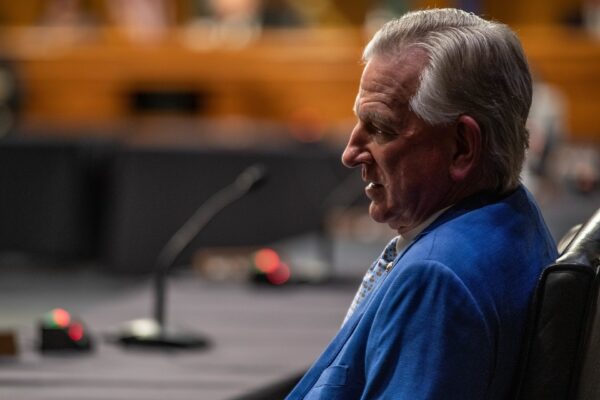
Senator Tommy Tuberville is now reportedly stepping into the fast-changing world of college athletics with a proposal aimed at reining in what he sees as a system veering toward instability.
During a recent hearing, Tuberville—drawing on his experience as a former college football coach at Auburn—argued that the current landscape, shaped by name, image, and likeness (NIL) rules, is not sustainable. The ability for student-athletes to profit from NIL deals has coincided with a sharp rise in transfers, as more players enter the transfer portal seeking better opportunities and, in many cases, more lucrative arrangements.
Under previous rules, transferring came with a significant cost: athletes were typically required to sit out a full year before competing again. That restriction has since been removed, allowing players to move more freely between programs. Tuberville contends that this new level of mobility has fundamentally altered the balance of college sports.
“This bill that I’m putting out is a basic idea,” Tuberville said, acknowledging that any attempt to impose new limits will likely face opposition. Still, he insisted that action is necessary to preserve the broader ecosystem of college athletics.
The senator warned that the current trend could have ripple effects beyond high-profile sports like football and basketball. According to Tuberville, revenue could increasingly concentrate on athletes and programs that generate television exposure, potentially leaving Olympic sports and women’s athletics struggling for funding.
“We’re gonna lose Olympic sports, we’re gonna lose women’s sports, because there’s not gonna be any money,” he said, suggesting that without intervention, some programs could be reduced to club-level competition. He also raised concerns about the long-term viability of Title IX protections if financial pressures intensify.
At the center of Tuberville’s proposal is a straightforward limitation: a five-year eligibility window for student-athletes, with no waivers or extensions. Once an athlete begins competing, the clock would start, and after five years, their college career would come to an end.
“You start, you got five years,” Tuberville said. “No waivers, no excuses.” He also criticized cases where older athletes remain in the system, arguing that extended eligibility can create imbalances and strain resources.
The debate over eligibility and transfers has gained renewed attention in light of a recent legal case involving Trinidad Chambliss, a quarterback at Ole Miss. Chambliss, 23, sued the NCAA seeking an additional year of eligibility. A judge recently denied the NCAA’s request to appeal a ruling in his favor, meaning he is likely to play next season while the case continues.
That case underscores the broader legal and structural pressures facing the NCAA, as courts and policymakers increasingly shape the rules governing college sports.
Tuberville’s proposal reflects a growing concern among some lawmakers that without clearer boundaries, the system could drift further from its traditional model. At the same time, the push for reform raises its own questions about fairness, opportunity, and how to balance athlete rights with the long-term health of collegiate programs.
As the NIL era continues to evolve, the challenge will be finding a path that preserves competition and opportunity without allowing the system to fracture under its own weight.
[READ MORE: Trump Jokes with Fox Host While Addressing Iran Conflict, Raises Concerns Over Civilian Silence]