President Donald Trump is pressing technology companies to absorb the costs of rapidly expanding artificial intelligence data centers amid rising backlash from communities concerned about electricity prices, water use, and local infrastructure strain.
In a Truth Social post Monday, Trump emphasized the strategic importance of data centers while insisting that Americans should not bear the financial burden of powering them. “We are the ‘HOTTEST’ Country in the World, and Number One in AI. Data Centers are key to that boom, and keeping Americans FREE and SECURE but, the big Technology Companies who build them must ‘pay their own way,’” he wrote.
Trump also signaled an upcoming announcement tied to Microsoft, noting that his administration has been engaging major tech firms to prevent households from seeing higher utility bills driven by energy-intensive facilities.
That announcement came Tuesday, when Microsoft rolled out its “Community-First AI Infrastructure” initiative, outlining five pledges aimed at easing local opposition, wrote The WAshington Post. The company committed to paying its full share of electricity costs to avoid rate increases, minimizing water usage while replenishing more than it consumes, declining to seek property-tax abatements, reducing reliance on nondisclosure agreements, and investing in local workforce training and AI-related community programs.
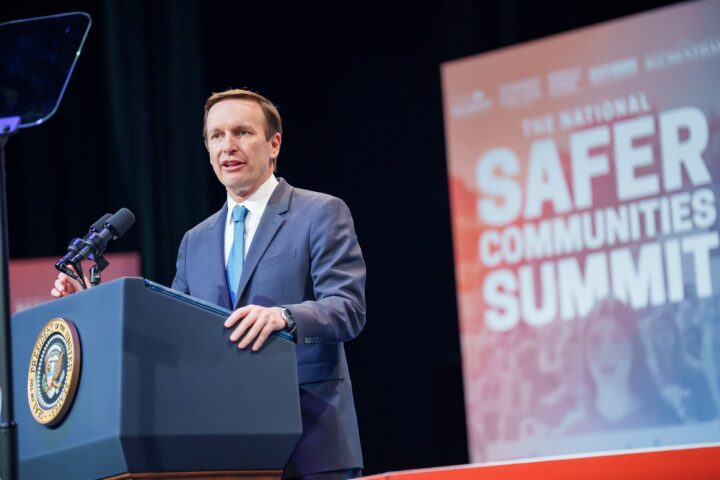
Microsoft President Brad Smith unveiled the plan at an event near the White House, explicitly crediting the president’s role. “He has made clear, quite rightly, in my view, that we need to stand up and step up as an industry and ensure that we pay the tab for things like the cost of electricity,” Smith said.
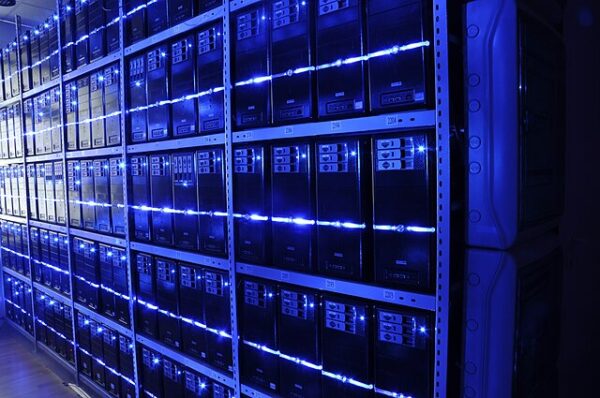
The move comes as opposition to data center construction has intensified nationwide. These facilities—massive warehouses packed with servers and cooling systems—consume vast amounts of electricity and water, fueling concerns over grid reliability, rate hikes, water depletion, and tax incentives granted by local governments.
Resistance has emerged on a bipartisan basis. In conservative areas, including parts of Oklahoma, residents have organized petitions and demanded accountability from officials negotiating with tech firms. Progressive groups such as the Democratic Socialists of America and the NAACP have also raised objections. Sen. Bernie Sanders has called for moratoriums on new projects, while Sen. Elizabeth Warren and other Democrats have questioned whether data centers are contributing to higher electricity prices. Both Democrats have been labeled “Luddites” for proposing a ban that would see America slip behind China in this growing technological front.
I will be pushing for a moratorium on the construction of data centers that are powering the unregulated sprint to develop & deploy AI.
The moratorium will give democracy a chance to catch up, and ensure that the benefits of technology work for all of us, not just the 1%. pic.twitter.com/PoV5ziA4oQ
— Sen. Bernie Sanders (@SenSanders) December 16, 2025
Divisions have surfaced even among Trump’s allies. Some “America First” figures, including former Rep. Marjorie Taylor Greene, have criticized what they view as an unchecked push for AI infrastructure.
The backlash has already stalled major investments. Data Center Watch, a project of the nonpartisan research firm 10a Labs, reported that 20 data center proposals valued at roughly $98 billion were derailed between April and June of last year—more than in the previous two years combined. The group identified 53 active opposition organizations across 17 states targeting 30 projects, with grassroots efforts increasingly influencing approval processes.
Analysts view Microsoft’s pledges as an attempt to blunt escalating political risk for developers, even as companies pursue larger facilities. Proposed projects include a Homer City, Pennsylvania, complex tied to seven gas-powered plants generating more electricity than the entire Philadelphia area, and a massive planned campus in the Texas panhandle powered by nuclear reactors and gas.
Microsoft has compared data centers to transformative infrastructure such as railroads and interstate highways but acknowledged the need for greater openness. “I think that the future is going to require a lot more communication, which, by definition, means fewer nondisclosure agreements,” Smith said. “We need more transparency. I think we took a big step in that direction today.”