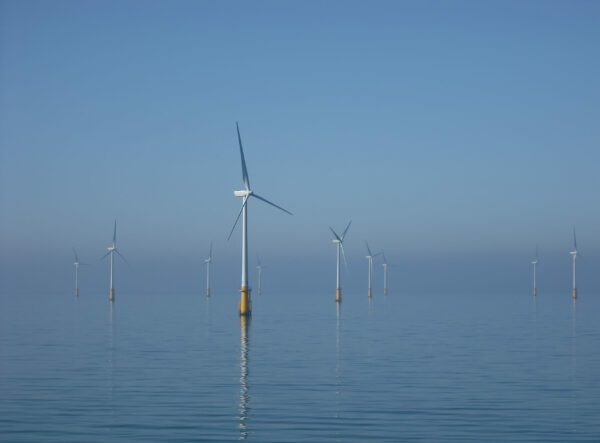
The Trump administration on Monday ordered an immediate pause on construction activity tied to all large-scale offshore wind projects currently underway in the United States, citing classified national security risks linked to the installations.
The directive, announced by the Department of the Interior, affects five major projects: Vineyard Wind 1, Revolution Wind, Coastal Virginia Offshore Wind, Sunrise Wind, and Empire Wind—developments concentrated largely along the East Coast and representing billions of dollars in private investment.
Interior Secretary Doug Burgum framed the move as a core matter of federal responsibility, emphasizing the administration’s security-first posture, according to Fox News.
“The prime duty of the United States government is to protect the American people,” Burgum said. “Today’s action addresses emerging national security risks, including the rapid evolution of the relevant adversary technologies, and the vulnerabilities created by large-scale offshore wind projects with proximity near our east coast population centers. The Trump administration will always prioritize the security of the American people.”
🚨 JUST IN: It's been revealed that the FIVE offshore windmill projects being terminated by President Trump and Sec. Doug Burgum could be replaced with *ONE* natural gas pipeline to produce the same amount of energy.
WIND ENERGY SUCKS! Trump is right!pic.twitter.com/g1YZ91Wrlb
— Eric Daugherty (@EricLDaugh) December 22, 2025
According to the Interior Department, the pause follows recently completed classified assessments prepared by the Department of Defense—referred to as the Department of War in the announcement—which identified potential threats associated with the scale and location of offshore wind infrastructure. The suspension takes effect immediately and will remain in place while federal agencies coordinate with leaseholders and state governments to examine possible mitigation strategies.
The department also pointed to longstanding, unclassified concerns raised across multiple federal studies regarding the impact of offshore wind turbines on radar systems. The massive rotating blades can produce radar “clutter,” obscuring genuine moving targets or generating false returns—an issue with implications for both military surveillance and homeland defense.
A 2024 report from the Department of Energy noted that while technical adjustments to radar thresholds can reduce interference, those same adjustments may also increase the risk of missing legitimate targets entirely.
“Today’s action ensures that national security risks posed by offshore wind projects are appropriately addressed and that the United States government retains its ability to effectively defend the American people,” the Interior Department said in its press release.
The decision marks a sharp escalation in the administration’s scrutiny of offshore wind development and aligns with broader energy policy shifts emphasizing reliability, domestic control, and security resilience. Several of the affected projects are already partially operational or approaching completion, raising the prospect of prolonged delays as federal reviews continue.