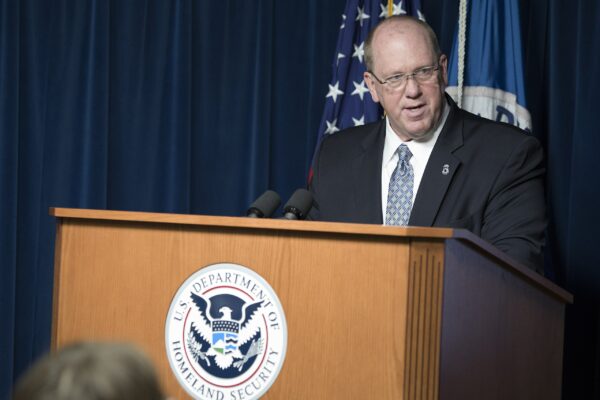
President Donald Trump’s top immigration envoy, Border Czar Tom Homan, took a more conciliatory, forward-looking approach Tuesday in Minnesota as he met with Democratic leaders to address ongoing unrest tied to federal immigration enforcement operations. The meetings came after Trump replaced Border Patrol commander Gregory Bovino with Homan to oversee federal efforts in the state in the wake of the controversial fatal shooting of 37-year-old ICU nurse Alex Pretti by a Border Patrol agent.
Homan described Tuesday’s discussions with Minnesota Governor Tim Walz and Minneapolis Mayor Jacob Frey as “productive,” emphasizing shared goals on public safety even amid disagreements over policy. In a post on X, Homan said that participants “all agree that we need to support our law enforcement officers and get criminals off the streets,” and that while they “don’t agree on everything,” the conversations were a good starting point.
Trump’s decision to send Homan reflects a shift in tone from earlier, more confrontational rhetoric from unauthorized DHS officials. The president has been working to de-escalate some of the tensions that have flared in Minnesota, particularly after two federal agents fatally shot Americans in separate encounters in recent weeks.
Gov. Walz used the meeting as an opportunity to reiterate long-standing concerns. According to his office, Walz pressed for “impartial investigations” into the shootings involving federal agents and called for a “swift, significant reduction in the number of federal forces in Minnesota,” even urging an end to what he described as a campaign of retribution against the state. The governor also requested that Minnesota state officials act as the main liaisons with Homan’s team going forward.
Mayor Frey’s remarks echoed the governor’s focus on reducing federal presence. He told Homan that his “main ask is for Operation Metro Surge to end as quickly as possible,” arguing that “public safety works best when it’s built on community trust, not tactics that create fear or division.” Frey also made clear that Minneapolis “does not and will not enforce federal immigration laws.”
Today I met with Governor Walz, Mayor Frey, and top law enforcement officials to discuss the issues on the ground in Minnesota. We all agree that we need to support our law enforcement officers and get criminals off the streets. While we don’t agree on everything, these meetings…
— Thomas D. Homan (@RealTomHoman) January 27, 2026
These discussions occurred against a backdrop of intense local unrest and criticism of federal immigration operations that have seen mass deployments of ICE and Border Patrol agents. The state and Minneapolis have repeatedly called for greater transparency and investigations into the recent deaths of Good and Pretti, events that have fueled protests and political pressure across the nation.
While Homan’s “productive” meetings with Walz and Frey suggest at least an opening for ongoing dialogue, differences remain stark. Local leaders have continued to press for significant reductions in federal force levels and a shift in strategy, even as the administration seeks to maintain law and order and enforce immigration laws.
Trump’s broader objective appears to be balancing firm enforcement of immigration laws while addressing the very real concerns raised by state and local officials about civil unrest and public safety. The president has emphasized the need for cooperation, signaling that reductions in forces and adjustments to tactics might be considered, although there has been no indication of a complete withdrawal of ICE or Border Patrol operations in the state.
Today, Chief O'Hara and I met with Border Czar Homan and had a productive conversation. I reiterated that my main ask is for Operation Metro Surge to end as quickly as possible. Public safety works best when it's built on community trust, not tactics that create fear or division.
— Mayor Jacob Frey (@MayorFrey) January 27, 2026
In his statement, Homan looked ahead to continued engagement with stakeholders across Minnesota, emphasizing that a productive start does not mean the end of tough enforcement, but rather the beginning of a more collaborative and focused effort in the days ahead.
The evolving strategy in Minnesota highlights the administration’s attempt to manage a volatile situation by combining strong immigration enforcement with strategic outreach to local leadership, even in the face of ongoing disagreements over policy and tactics.
[READ MORE: Police Shut Down Second Anti-Deportation Protest at Minnesota Hotel After Violence Erupts]