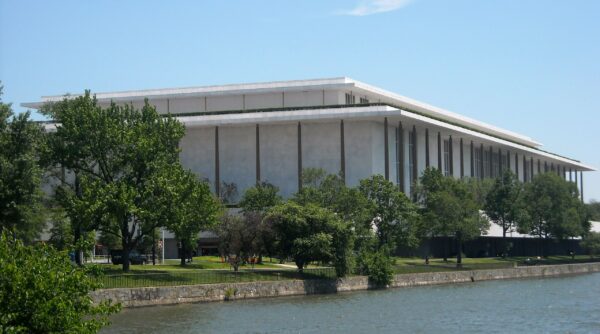
President Donald Trump said Monday that planned renovations to the Kennedy Center in Washington, D.C., could involve stripping the iconic performing arts complex down to its structural steel, while stopping short of demolishing the building outright.
Speaking to reporters in the Oval Office, Trump outlined a sweeping vision for the project, which follows his announcement the day before on social media that the venue—recently renamed the Trump Kennedy Center—would close for roughly two years beginning around July 4, 2026. The extended shutdown is intended to allow for comprehensive repairs and upgrades to a facility that has accumulated years of deferred maintenance.
“I’m not ripping it down. I’ll be using the steel. So we’re using the structure,” Trump told CNN. He added, “The steel will be all checked out because it’ll be fully exposed,” estimating the renovation could cost about $200 million. While some marble elements would be preserved, others would be removed, he said, with the goal of reopening the center as “brand new and really beautiful” at the “highest level.”
Trump’s remarks suggest a far more aggressive scope than previously discussed plans, which focused largely on infrastructure repairs rather than a near-total teardown of interior and exterior finishes. Earlier proposals centered on upgrades to HVAC systems, orchestra pits, bathrooms, exterior marble, roofing, seating, and security. Congressional documents reviewed by sources described those efforts as necessary repairs and improvements, funded in part by $257 million appropriated last summer for capital needs, without reference to fully exposing the building’s structural frame.
People familiar with internal discussions said Trump has expressed strong personal preferences about the project, though specific plans have not been publicly detailed. A full demolition option was considered earlier but rejected by Trump in favor of a major overhaul using the existing structure.
The decision to close the Kennedy Center entirely for two years represents a departure from an earlier “pardon-the-dust” strategy that would have allowed performances to continue during phased construction over roughly five years. Trump criticized that approach, arguing that constant foot traffic would make meaningful work impossible. “You can’t do any work because people are coming in and out,” he said, recounting an anecdote in which a marble installer complained that newly set pieces were being stepped on before they could dry.
The announcement caught many inside the institution by surprise. Board members, National Symphony Orchestra affiliates, musicians, and staff largely learned of the closure through Trump’s social media post, according to people familiar with the situation. Only a small group was briefed in advance to prevent leaks. While board approval is required, communications around a formal vote have been unclear, and the board—largely made up of Trump appointees—is expected to back the plan.
The closure comes as the Kennedy Center faces broader operational and financial strain. Artist cancellations and boycotts across multiple genres have complicated efforts to assemble a full 2026–2027 season. Programming discussions have stalled amid concerns about audience turnout, infrastructure reliability, and marketing. Some performances scheduled for the current season remain on the calendar, though their status is uncertain, and questions remain about refunds for subscribers.
Early in Trump’s Term, Richard Grennell, the new president of the center, said he was shocked at how poorly taken care of the building had been and said that much of the money connected to the center had been “phantom revenue” after reviewing the budget.
Opened in 1971, the Kennedy Center has accumulated an estimated 10 to 15 years of deferred maintenance, prompting consultations with experts early in Trump’s second term. While a spokesperson has described the remodel as primarily addressing those backlogs, the president’s comments have fueled speculation about whether the project could extend beyond restoration to something closer to a wholesale rebuild, including potential changes to the 2019 Reach expansion.
[Read More: Trade Deal With India Pushes Nation Away From Russia]