Treasury Secretary Scott Bessent offered a note of cautious optimism Monday as Americans grapple with rising gas prices, saying relief could be on the horizon despite ongoing instability in a key global shipping lane.
Speaking on Fox News’s “America’s Newsroom,” Bessent pointed to market dynamics tied to the conflict near the Strait of Hormuz, where disruptions have strained global oil flows. With the average price of regular gasoline in the United States climbing to roughly $4.46 per gallon—up sharply from about $3.17 a year ago—pressure on consumers has intensified.
“Help is on the way as of today,” Bessent said, framing the situation as a temporary imbalance. According to the Treasury secretary, the market is currently short between 8 million and 10 million barrels of oil per day due to the conflict affecting shipping through the strait. That shortfall has helped drive prices upward, hitting American households already dealing with broader cost concerns.
Bessent explained that oil transport through the region operates on a massive scale, with each tanker carrying roughly 2 million barrels. He suggested that a backlog of between 150 and 200 tankers could soon begin moving through the strait, potentially restoring supply and easing price pressures.
If those vessels are able to pass through in steady numbers—estimated at four or five per day—the market could quickly shift from shortage to surplus. “I think the market’s going to be very well supplied,” Bessent added, signaling confidence that the current spike may not be permanent.
The bottleneck stems from actions by Iran’s military, which has restricted shipping through the Strait of Hormuz amid heightened tensions tied to the ongoing U.S.-Israeli conflict. The strategic waterway is a critical artery for global energy supplies, and any disruption there tends to ripple quickly through international markets.
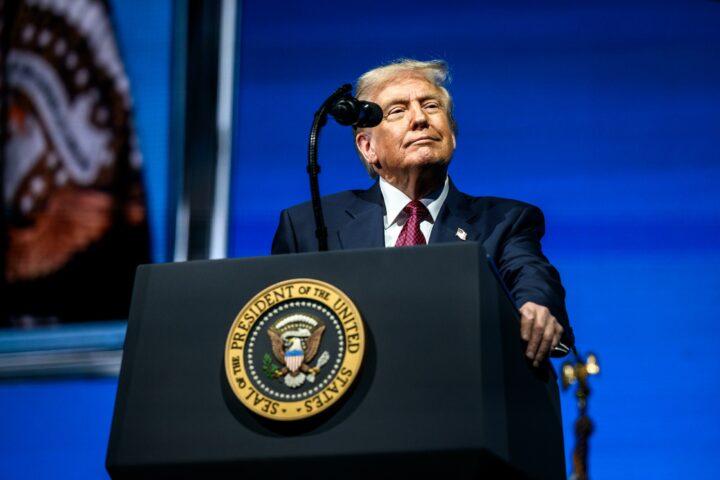
President Donald Trump addressed the situation over the weekend, stating that the United States would assist in ensuring safe passage for commercial vessels navigating the strait. In a post on Truth Social, Trump said the U.S. had communicated to regional actors that it would guide ships safely through the restricted waters to allow commerce to continue.
“For the good of Iran, the Middle East, and the United States,” Trump wrote, emphasizing stability and the free flow of trade as shared interests across the region.
At the same time, the situation on the ground—or rather, at sea—remains tense. U.S. Central Command reported Monday that Iranian forces had fired on American warships, prompting a response in which six Iranian small boats were destroyed. The exchange highlights the fragile balance between maintaining open trade routes and avoiding further escalation.
Despite the risks, U.S. forces appear to be maintaining a presence aimed at keeping shipping lanes operational. According to Centcom, two cargo ships successfully transited the Strait of Hormuz on Monday, escorted by Navy guided-missile destroyers providing protection as they entered the Persian Gulf.
The developments underscore a broader reality: while markets may eventually stabilize, the path there runs through a region where military conflict and economic consequences are tightly intertwined. For American consumers, relief at the pump may depend not only on supply chains catching up, but also on whether tensions abroad cool rather than intensify.
[READ MORE: Rubio To Meet With Pope Leo]