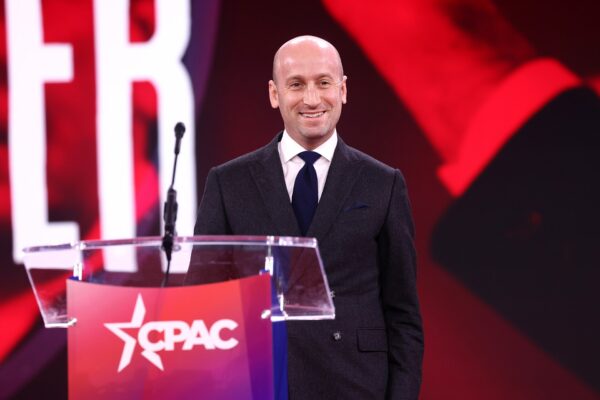
White House Deputy Chief of Staff and homeland security adviser Stephen Miller is now reportedly emerging as a central figure in discussions over Venezuela’s future, as the Trump administration debates how to manage the country following the dramatic removal of longtime strongman Nicolás Maduro.
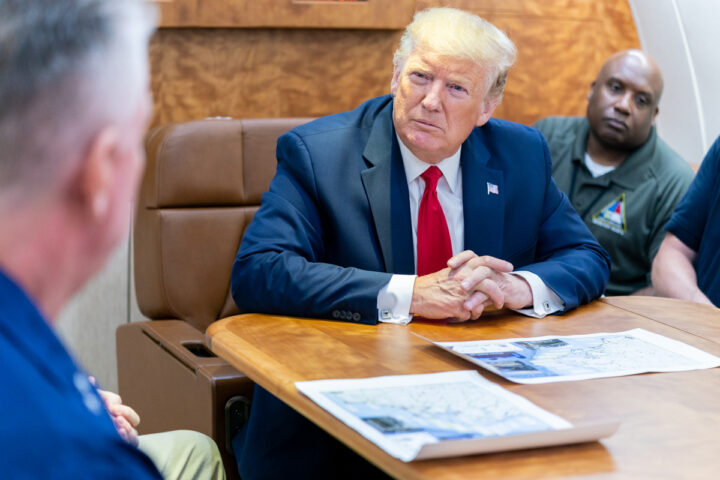
President Donald Trump announced Saturday that the United States would “run the country” now that Maduro is in custody, a declaration that immediately sent shockwaves through diplomatic circles.
Standing alongside Trump during that announcement were Miller, Secretary of State Marco Rubio, Defense Secretary Pete Hegseth, and Chairman of the Joint Chiefs of Staff Dan Caine, underscoring the seriousness of the moment.
According to a report by The Washington Post citing anonymous sources, the White House is now “weighing” whether to give Miller a more elevated role in overseeing post-Maduro operations.
The paper noted that Miller has been a driving force behind the administration’s hardline immigration and border policies and “took a central role in the effort to remove Maduro,” positioning him as a natural candidate for a leading role in shaping what comes next.
In the immediate aftermath of Maduro’s capture, Venezuela’s vice president, Delcy Rodríguez, assumed power. Trump told the New York Post that the United States would avoid deploying troops if Rodríguez cooperates. “If the vice president does what we want,” Trump said, the U.S. would not put boots on the ground.
Rodríguez, however, quickly struck a defiant tone. Shortly after Maduro’s arrest, she lashed out at Trump, declaring that Venezuela would not become a colony “of any empire,” signaling that any transition would be fraught with tension and resistance.
The president’s blunt assertion that the United States would “run” Venezuela also sparked debate among former officials familiar with the region. On Sunday, former special envoy to Venezuela Elliott Abrams suggested Trump may have been speaking off-the-cuff rather than outlining a concrete plan.
“You know, it’s a very big country,” Abrams said. “It’s twice the size of California, 25 million people, roughly. It’s too complex for us to run.” Abrams argued that Washington should instead focus on supporting the emergence of a democratic, elected government capable of rebuilding the country with international backing.
“What we should be looking for is a popular government, a democratic, elected government that can begin to rehabilitate the country with our support and the support of the other democracies that surround Venezuela,” Abrams said. While he acknowledged that such an outcome is possible, he dismissed the idea of direct U.S. governance from Washington as unrealistic.
Still, the fact that Miller is reportedly being considered for a leading role highlights how seriously the Trump administration is taking the transition. Known for his aggressive policy approach and loyalty to the president’s agenda, Miller’s potential involvement signals that border security, immigration, and enforcement priorities could heavily influence U.S. policy toward Venezuela.
As the administration weighs its options, the path forward remains uncertain. What is clear is that Trump’s inner circle — with Miller now firmly in the spotlight — will play a decisive role in shaping how the United States navigates the volatile aftermath of Maduro’s fall and attempts to steer Venezuela toward a new political reality.
[READ MORE: Trump Says 9/11 Could Have Been Prevented If Officials Heeded His Warning About Bin Laden]