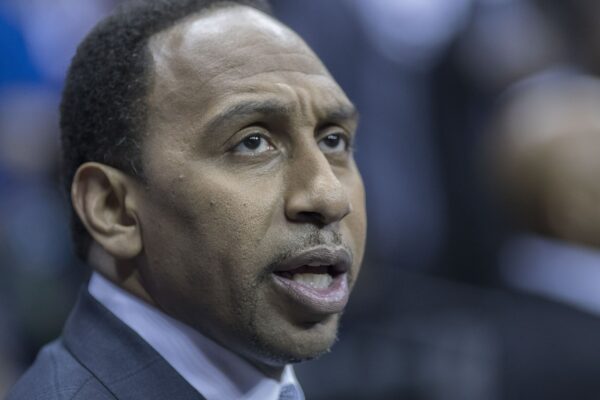
Sports commentator Stephen A. Smith reportedly weighed in Wednesday on the fatal shooting of 37-year-old Renee Nicole Good by an Immigration and Customs Enforcement agent in Minneapolis, arguing that the officer involved acted within his legal rights under the circumstances.
Good’s death at the hands of federal law enforcement has sparked intense debate nationwide, with sharply divided reactions over whether the use of lethal force was justified. Video of the incident shows Good blocking the roadway while ICE agents were conducting immigration enforcement. When agents exited their vehicle and attempted to gain access to Good’s car, she tried to flee the scene. As she drove forward, she nearly struck one of the agents. That agent responded by firing multiple shots, killing her.
The Department of Homeland Security, under Secretary Kristi Noem, accused Good of “weaponizing” her vehicle and said she attempted to run over the agent. DHS went so far as to characterize her actions as an “act of domestic terrorism,” maintaining that the officer acted in self-defense. Critics of the shooting, however, have argued that Good was simply trying to leave after agents attempted to open her car door and that lethal force was unnecessary.
On Wednesday’s episode of Straight Shooter with Stephen A., Smith said he reviewed the video multiple times and approached the incident from both a legal and moral standpoint. From a strictly lawful perspective, Smith said he does not expect the ICE agent to face prosecution.
“I saw the video on numerous occasions and, seeing what transpired, from a lawful perspective as it pertains to a law enforcement official, don’t expect him to be prosecuted,” Smith said. “He was completely justified.”
Smith emphasized that Good’s actions put the agent in danger and that, under the law, officers are permitted to defend themselves when faced with a potentially deadly threat. He noted that attempting to flee in a vehicle while an officer is directly in harm’s way can be interpreted as a life-threatening situation for law enforcement.
At the same time, Smith acknowledged that the incident raises difficult questions from a humanitarian perspective. While maintaining that the shooting was legally justified, he questioned whether other options could have been pursued.
“From a humanitarian perspective, however, why did you have to do that?” Smith asked. He suggested that alternatives such as shooting the tires might have been possible, arguing that if the agent had time to move out of the way, there may have been other ways to stop the vehicle without killing the driver.
Smith pointed out that Good was not speeding down the road at high velocity but was initially stopped in the middle of the street. He said her decision to drive off, rather than comply with law enforcement, ultimately led to the deadly outcome.
“She was parked in the middle of the street, and rather than get out the car, she wrongfully tried to drive off and wrongfully disregarded a law enforcement official — which is exactly what ICE is,” Smith said. “And as a result, lost her life because of it.”
While critics continue to dispute the federal government’s account, Smith’s comments reflect a view that places responsibility squarely on Good’s actions while recognizing the tragedy of the outcome. His remarks underscore the broader national debate over law enforcement authority, self-defense, and the consequences of refusing to comply during police encounters.
[READ MORE: Trump Proposes Record $1.5 Trillion Defense Budget for 2027 to Fund ‘Dream Military’]