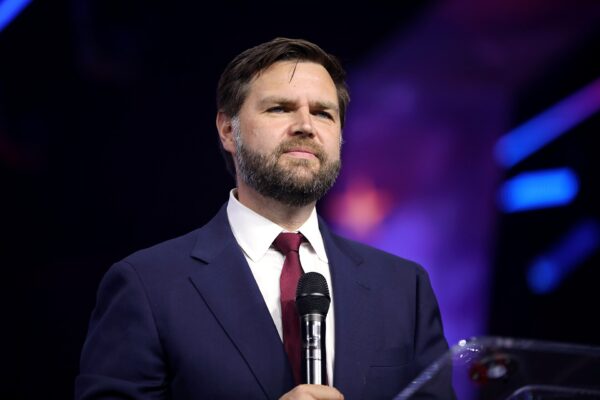
Vice President JD Vance privately raised serious concerns about entering a full-scale conflict with Iran, cautioning against the costs and consequences of war even as President Donald Trump moved closer to authorizing major military action, according to a new report.
The details, published Tuesday by The New York Times and drawn from an upcoming book by journalists Jonathan Swan and Maggie Haberman, shed light on internal debates within the administration as tensions escalated into open conflict.
According to the reporting, Vance—a Marine Corps veteran who served in Iraq—consistently expressed skepticism about the United States joining Israel in a regime-change war against Iran. He warned that such a move would divert resources, strain the country financially, and risk entangling the U.S. in another prolonged conflict.
“Our interest, I think very much, is in not going to war with Iran,” Vance said during an October 2024 conversation, emphasizing the potential burden on American resources and the steep financial cost.
Those concerns reportedly carried over into internal discussions as the situation intensified. When Trump initially warned Iran against violent crackdowns on protesters earlier this year, Vance encouraged a more limited response—favoring a targeted, punitive strike rather than a broader military campaign.
But as it became clear the president was leaning toward a larger operation, Vance shifted his focus, urging that any action be decisive and efficient. Even then, he cautioned that war with Iran could unleash regional instability and lead to significant casualties.
The human toll has already been severe. According to the U.S.-based Human Rights Activists News Agency, 1,665 civilians in Iran—including at least 248 children—have been killed since the conflict began. On the American side, seven service members have died in Iranian attacks, while six more were killed in a refueling aircraft crash in Iraq last month.
Vance also reportedly warned that a war could undercut a key political promise made during the 2024 campaign—that the Trump-Vance ticket would avoid launching another major U.S. conflict. He suggested that voters who supported that message might feel betrayed if the U.S. became deeply involved in yet another war overseas.
Despite those concerns, support among the president’s base appears to remain strong. A CBS News/YouGov poll conducted last month found that 75 percent of self-identified “MAGA Republican” respondents expressed high confidence in Trump’s handling of Iran.
Inside the administration, views on the conflict have varied. Defense Secretary Pete Hegseth was described as a strong advocate for military strikes, while Secretary of State Marco Rubio was characterized as more ambivalent, though he has since defended the war as necessary to prevent Iran from developing nuclear weapons and advancing its ballistic missile capabilities.
Military leadership also weighed in on the logistical side. Joint Chiefs Chairman Dan Caine reportedly outlined how a sustained campaign would impact U.S. munitions stockpiles, though he did not take a position on whether the operation—referred to as Operation Epic Fury—should proceed.
Notably, Vance was absent from a key White House meeting on Feb. 11 involving Trump, Israeli Prime Minister Benjamin Netanyahu, and other officials. At the time, he was traveling in Azerbaijan, where he met with President Ilham Aliyev.
The report paints a picture of an administration grappling with competing priorities—balancing strategic goals with the heavy costs of military action. While the president ultimately moved forward, the internal debate underscores a familiar tension in American foreign policy: the desire to project strength abroad while avoiding the long and costly shadow of another war.
[READ MORE: Allies Raise Alarm as Trump’s Iran Rhetoric Sparks Fierce Debate]