Oil prices tumbled more than 6% on Monday, the day before the midterm elections, as signals from Washington and Tehran that they were ready to resume talks boosted hopes of ending the war in the Middle East.
U.S. crude for December delivery settled at $96.98 a barrel, down more than $7 on the day. The slide continued into Election Day, with U.S. crude trading around $95 per barrel Tuesday afternoon.
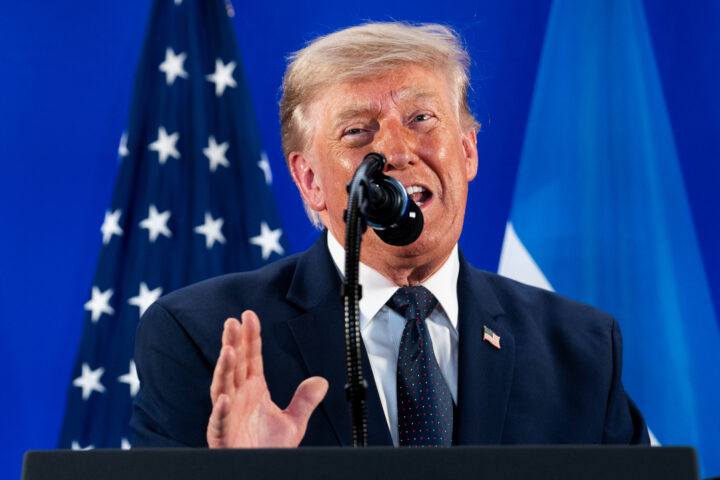
President Trump seized on the drop during his closing midterm remarks at the Lincoln Memorial Reflecting Pool. “Oil today is down $10,” Trump said, adding that prices would fall much further because the U.S. is winning against Tehran. He called it the biggest drop in oil history.
The diplomatic signals also came from Iran. Iranian President Masoud Pezeshkian said Monday that Supreme Leader Mojtaba Khamenei had granted the government powers to negotiate with the United States to end the conflict.
Qatar, backed by Egypt, Saudi Arabia, Pakistan and Turkey, is leading the effort to bring both sides back to the negotiating table.
Not everyone is convinced the momentum will last. Arne Lohmann Rasmussen, chief analyst at Global Risk Management, said Trump’s signals may be tactical ahead of the midterms.
The drop came even after renewed attacks on commercial vessels near the Strait of Hormuz over the weekend. Brent crude, the global benchmark, had already slipped below $112 a barrel on Sunday as investors weighed those attacks against the prospect of a diplomatic breakthrough.
The Strait of Hormuz, a critical chokepoint for global oil shipments, has been closed at times during the war. Even when tankers have been allowed through, the cost of moving crude through the region has climbed. Damage to energy infrastructure in the Middle East and from the Russia-Ukraine war has added further pressure.
Relief could soon reach drivers. GasBuddy petroleum analyst Patrick De Haan said wholesale gasoline and diesel prices point to a decline of roughly 16 cents a gallon, and the national average could fall below $4 within a week if conditions hold.
Energy company stocks fell Monday along with crude, while many other sectors got a lift from cooling fuel costs. On Tuesday, the S&P 500 and Nasdaq opened higher as oil extended its losses. Oil also dropped Tuesday morning after Trump said the U.S. would end roughly $4 billion in annual funding to Israel.
The sell-off marks a turnaround from September, when Brent crude pushed past $100 a barrel as fighting between the U.S. and Iran escalated. At the time, Trump predicted that oil prices would start tumbling right after the election.
“Right after the election, oil prices are going to be tumbling downward,” Trump said then.
High gas prices have been a major political liability for Republicans this cycle, with voters ranking the economy, the Iran war and fuel costs among their top concerns.
Analysts say the market remains highly sensitive to headlines. Renewed military escalation could quickly push prices back up, while a diplomatic agreement could send them lower still.
All eyes are now on Tuesday’s results, with Democrats hoping to win at least partial control of Congress.
[READ MORE: Don Bacon Says GOP Will ‘Debate’ MAGA’s Future if Republicans Stumble in Midterms]