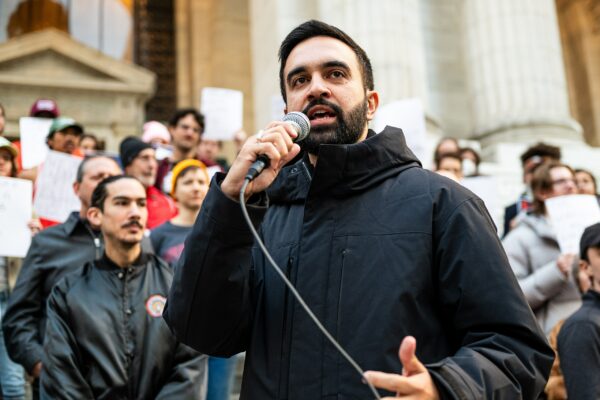
New York City Mayor Zohran Mamdani is reversing a key policy decision after 18 people died on the streets during record cold temperatures, moving to reinstate homeless encampment sweeps that he had previously halted.
In one of his early actions as mayor, Mamdani ordered police and sanitation workers to stop dismantling homeless encampments — a departure from the approach of his predecessor, Mayor Eric Adams, under whom sweeps were standard practice. Mamdani argued at the time that the city’s primary responsibility was “connecting [homeless] New Yorkers to housing.”
Now, amid mounting concerns over public safety and the growing number of deaths, the mayor is expected to resume encampment sweeps as early as Wednesday, according to the New York Post. The decision marks a significant shift in tone and strategy for the administration.
Under the reinstated policy, New York’s Department of Homeless Services will lead the sweeps. Homeless individuals will receive notices giving them one week to clear their encampments. During that time, outreach workers will make repeated visits to connect individuals with shelter placements and supportive services.
The move comes as the city grapples with both humanitarian concerns and rising public frustration. According to 311 data, New York City has received more than 3,300 complaints related to homeless encampments.
Curtis Sliwa, leader of the Guardian Angels — a volunteer group that conducts homeless outreach — said that many homeless individuals resist entering shelters for a variety of reasons.
“First off, they’re not in control of their mental faculties,” Sliwa said. “Number two, they fear going into a shelter where they’re going to be preyed upon, where what few, few items that they may have will be stolen from them, where they can be sexually abused and physically harassed, and just again turned into a human piñata.”
Sliwa also pointed to addiction issues and strict shelter rules, including a 10 p.m. curfew, as deterrents. Some individuals, he said, believe they would be better off in a jail cell than in a shelter.
Before deciding to resume sweeps, Mamdani attempted to address the cold-weather crisis by converting city buses into temporary warming centers. However, the initiative faced criticism after reports indicated the buses were difficult to locate. Some buses, which had 40 seats each, were reportedly not operating at full capacity.
Mamdani acknowledged communication shortcomings related to the warming buses. “I think at the end of the day, that is the responsibility that I have as a mayor,” he said. “It’s never a moment to pass the buck to anyone else.”
Norman Siegel, a civil rights attorney who leads the Street Homeless Advocacy Project, attributed some of the problems to inadequate signage. “As the cliché goes,” he said, “Sometimes the left hand doesn’t know what the right hand is doing.” In response, the mayor’s team pledged to improve signage in more than ten languages.
It remains unclear whether the reinstated encampment sweeps will be a temporary winter measure or a permanent policy change. Mamdani’s office did not immediately respond to a request for comment on the long-term plan.
With freezing temperatures exposing the limits of the city’s approach and complaints mounting, the policy reversal signals a recognition that the status quo was not working — and that the city may need a firmer strategy to address homelessness on its streets.
[READ MORE: Pritzker Shrugs Off White House Speculation as He Addresses Weight Loss Questions]