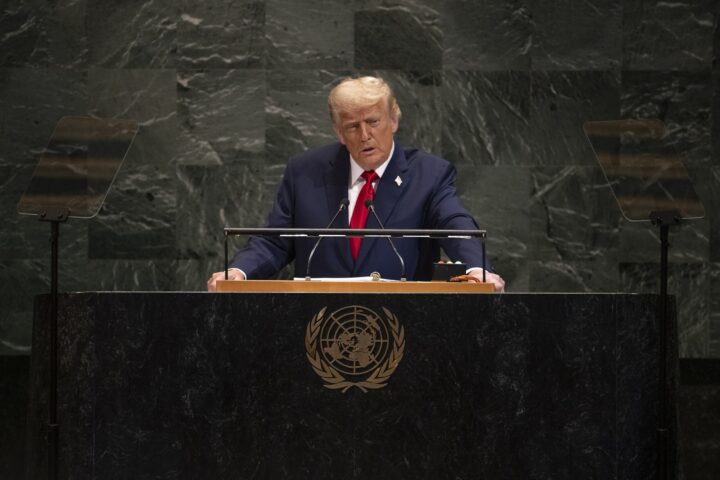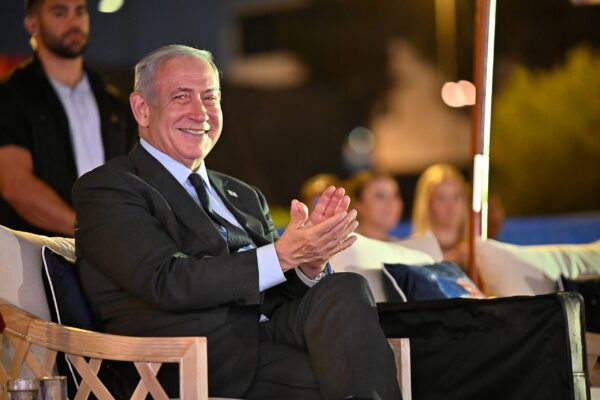
Israeli Prime Minister Benjamin Netanyahu is scheduled to travel to Washington on Wednesday for talks with U.S. President Donald Trump, as the United States resumes indirect negotiations with Iran over its nuclear program amid rising regional tensions.
Netanyahu’s office announced the trip Saturday, a day after American and Iranian representatives met in Oman for indirect discussions focused on Tehran’s nuclear activities. The talks produced no major breakthrough, instead restarting conversations on the framework for future negotiations.
Israel has made clear it intends to push for a broader agenda than nuclear limits alone, explained PBS. “The prime minister believes that all negotiations must include limiting the ballistic missiles, and ending support for the Iranian axis,” Netanyahu’s office said, referring to Iran’s backing of groups such as Hezbollah in Lebanon and Hamas in the Palestinian territories.
The U.S. delegation in Oman included Middle East special envoy Steve Witkoff and Jared Kushner. Trump described Friday’s talks as “very good” and said additional rounds would take place early the following week. The White House offered no immediate comment on the upcoming Netanyahu-Trump meeting, their first since December.
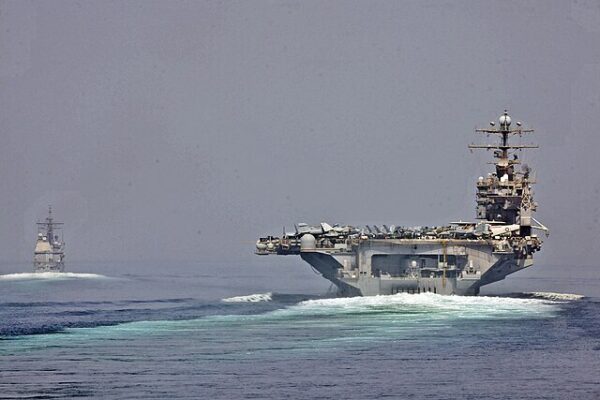
Diplomacy is unfolding alongside a visible U.S. military buildup. Washington has deployed major assets to the region, including the aircraft carrier USS Abraham Lincoln and accompanying warships, as Trump has warned of possible military action if negotiations fail to restrain Iran’s nuclear ambitions. For the first time in these talks, the U.S. included its top regional military commander, Navy Adm. Brad Cooper of Central Command, who later visited the carrier with Witkoff and Kushner.
Earlier in the weekend, officials announced that F-22s were pulled from Super Bowl flyover due to reassignment for operational missions, for example. Although it is unclear if they are needed for a possible American attack on Iran, this type of aircraft participated in the US’s Operation Midnight Hammer in June of last year, according to reports.
Iranian officials have sought to lower the temperature publicly. Foreign Minister Abbas Araghchi said the Oman discussions needed to proceed “in a calm atmosphere, without tension and without threats,” adding that negotiators would return to their capitals after the session concluded.
In comments to Al Jazeera on Saturday, Araghchi warned that if the U.S. attacks Iran, Tehran lacks the ability to strike American territory directly “and therefore has to attack or retaliate against U.S. bases in the region.” He cited “very, very deep distrust” rooted in earlier episodes, including U.S. bombings of Iranian nuclear facilities during a 12-day Israel-Iran conflict last June.
Additional diplomatic ideas have circulated in recent weeks. Proposals from Egypt, Turkey, and Qatar have suggested that Iran pause uranium enrichment for three years, export highly enriched material, and commit to not initiating ballistic missile use. U.S. Secretary of State Marco Rubio has indicated such measures should be part of broader discussions.+