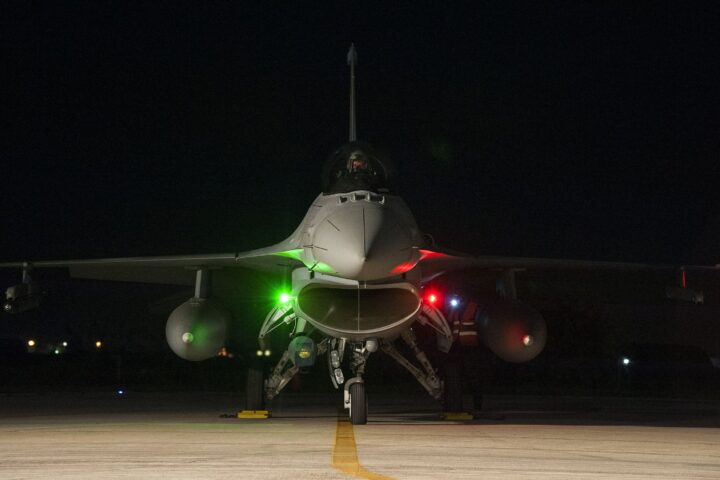
A serious aviation scare unfolded Friday when a U.S. Air Force refueling tanker failed to communicate its position while flying near a commercial JetBlue flight, forcing the civilian pilot to take evasive action to avoid a potential midair collision.
JetBlue Flight 1112 was en route from the Caribbean island of Curaçao to New York, flying roughly 40 miles off the coast of Venezuela. According to radio transmissions, less than 20 minutes into the flight the JetBlue pilot abruptly halted his trajectory after spotting the military tanker at close range — an aircraft that was less than 20 seconds away at cruising speed.
“They don’t have their transponder turned on, it’s outrageous,” the JetBlue pilot told air traffic controllers in real time. “We almost had a midair collision up here.”
Air traffic controllers confirmed they were unable to see the tanker on radar, compounding the danger. “They’ve been outrageous with the unidentified aircraft within our airspace,” one controller said, adding that this was not the first such incident involving military aircraft.
It remains unclear where the Air Force tanker was headed, though the JetBlue pilot told controllers the aircraft appeared to be flying northeast, toward Venezuelan airspace.
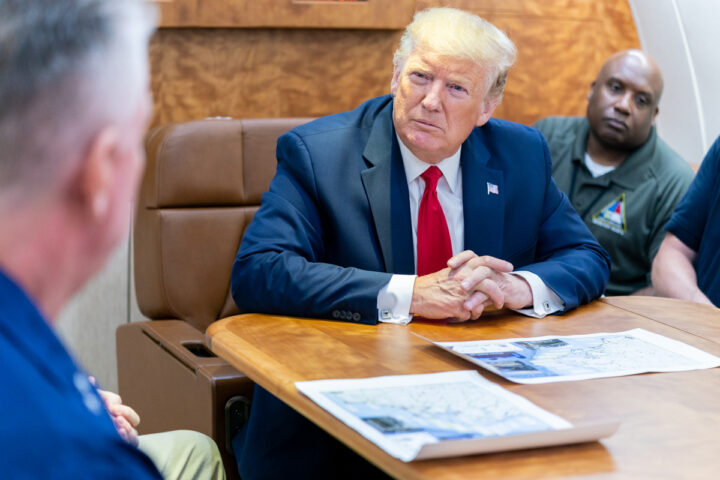
The incident comes amid a sharp increase in U.S. military activity across the Caribbean, driven by President Donald Trump’s intensifying pressure campaign against Venezuelan President Nicolás Maduro. A spokesman for U.S. Southern Command, Col. Manny Ortiz, said the military is reviewing the matter.
“We are aware of the recent reporting regarding U.S. military aircraft operations in the Caribbean and are currently reviewing the matter,” Ortiz said. “Safety remains a top priority, and we are working through the appropriate channels to assess the facts surrounding the situation.”
Concerns extended beyond a single flight. Curaçao air traffic control reportedly warned at least three other pilots the following night to remain alert for unidentified aircraft in the same airspace, suggesting a broader pattern of risk.
JetBlue confirmed it has formally reported the incident. “We have reported this incident to federal authorities and will participate in any investigation,” JetBlue spokesman Derek Dombrowski told The New York Times.
The near miss unfolded against the backdrop of rapidly escalating tensions with Venezuela. In recent weeks, the Trump administration has dramatically expanded U.S. military presence in the region as part of its campaign to pressure Maduro out of power. Last week, U.S. forces seized a sanctioned Venezuelan oil tanker, a move Maduro’s government denounced as an “act of piracy.”
Trump later defended the seizure, telling reporters the tanker was taken “for a very good reason” and that the United States intended to keep it.
Maduro responded with fiery rhetoric, telling supporters at a rally that he intends to “smash the teeth of the North American empire.”
Beyond tanker seizures, the administration has ordered a significant buildup of military assets in the Caribbean and authorized repeated strikes on alleged drug-smuggling boats. Those operations have resulted in more than 80 deaths and sparked controversy over reports of “double-tap” strikes that allegedly targeted survivors of initial attacks.
As geopolitical tensions rise, the close call involving JetBlue Flight 1112 underscores the risks posed when military operations intersect with civilian air traffic — and raises urgent questions about coordination, communication, and safety in increasingly crowded skies.
[READ MORE: MAGA Leaders Worry Trump Is Losing Voters]