As tensions escalate over control of vital oil routes in the Middle East, retired Lt. Gen. Keith Kellogg is raising a possibility that many Americans remain wary of: the eventual need for U.S. ground forces. Speaking Tuesday, Kellogg argued that securing key strategic points like Iran’s Kharg Island and ensuring open passage through the Strait of Hormuz may ultimately require more than air and naval power alone.
During an appearance on Fox & Friends with host Brian Kilmeade, Kellogg—who served as President Trump’s special envoy for Ukraine until January—made clear he believes a limited ground presence could be necessary. He emphasized, however, that such forces would not need to operate deep inside Iran itself.
“We kind of need to do it the way the Romans used to do it,” Kellogg said, invoking historical precedent. He suggested that placing forces on the ground to secure territory could provide the stability needed to reopen the strait and restore confidence in global shipping lanes.
Kellogg pointed to Kharg Island as a critical target, describing it as central to Iran’s economic strength. The island serves as a major oil terminal, handling roughly 90 percent of the country’s exports. In his view, simply reopening the lower half of the Strait of Hormuz for tanker traffic would not be enough if Iran’s economic lifeline remains intact.
“I have great confidence in our men and women in the military, and especially of the Marine Corps,” Kellogg said, while stressing that a two-part strategy would likely be required—one that both ensures safe passage at sea and addresses threats tied to the island.
His remarks come as the Trump administration reportedly considers options involving air and naval operations to protect oil shipments and potentially target Kharg Island. At the same time, the Pentagon has accelerated the deployment of thousands of Marines and sailors to the region, underscoring the seriousness of the situation even as the president publicly denies plans for a full-scale ground invasion.
President Trump appeared to dial back the immediate threat of escalation earlier this week. After previously warning that the United States could “obliterate” Iranian power plants if the strait was not reopened within 48 hours, he announced a five-day pause on potential strikes, citing what he described as “very good” and “productive” conversations with Tehran. Iranian officials, however, have denied that any such talks are taking place.
Kellogg cautioned that relying solely on airstrikes or naval القوة may not achieve long-term objectives. “You can do certain things from the air, you can do certain things from the sea,” he said, “but there’s a time you have to occupy land.” His comments reflect a longstanding military argument that control on the ground often determines the outcome of conflicts—an assertion that carries significant implications given the risks involved.
Those risks are not lost on the American public. A Reuters/Ipsos poll released last week found that few Americans support sending U.S. troops into a ground war with Iran, even as nearly two-thirds believe President Trump may ultimately choose that path.
Meanwhile, developments on the ground continue. Two individuals familiar with military movements told Reuters that soldiers from the Army’s 82nd Airborne Division, specifically a combat brigade, are being deployed to the Middle East.
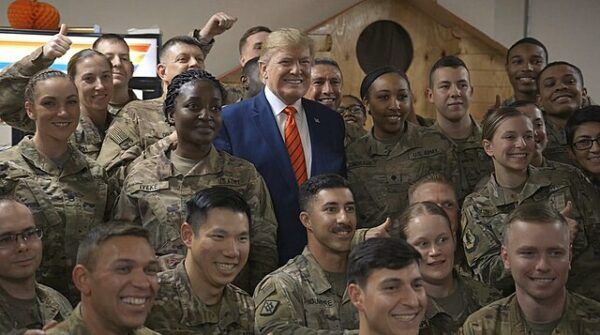
The human cost of the conflict is already mounting. According to Pentagon figures, at least 13 U.S. service members have been killed and approximately 232 others wounded since fighting began on Feb. 28.
As policymakers weigh next steps, Kellogg’s comments highlight a difficult reality: military options may expand before they contract, even as the consequences of deeper involvement remain uncertain.
[READ MORE: Trump Names Top Tech Leaders To Advisory Council]