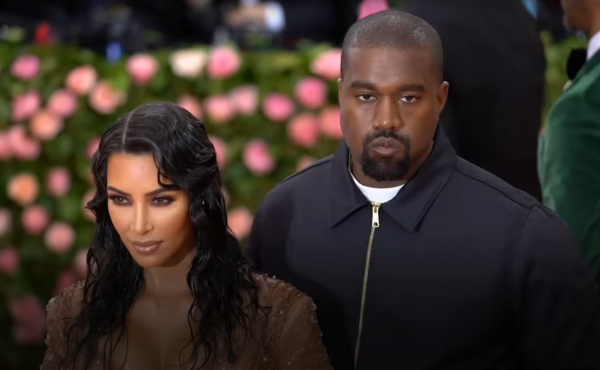
Hip hop artist and entrepreneur Kanye West issued a public apology Monday in a full-page advertisement in The Wall Street Journal, addressing years of erratic behavior that included the use of white nationalist and antisemitic imagery and statements.
In the roughly 750-word message titled “To Those I’ve Hurt,” West, who legally changed his name to Ye in 2021, attempted to explain the mindset behind his past actions while acknowledging the harm they caused. He opened the letter by referencing a traumatic brain injury he suffered in a 2002 car accident, which he said contributed to his diagnosis of bipolar I disorder.
“I lost touch with reality,” West wrote. He said his condition worsened over time as he failed to properly address it, leading him to say and do things he now regrets. West acknowledged that his behavior caused pain to those closest to him.
“Some of the people I love the most, I treated the worst,” he wrote.
West’s apology comes after years of controversy that alienated large segments of his fan base and the public. In 2018, he sparked outrage when he said slavery was “a choice,” a remark that angered many in the Black community. He later apologized for that statement.
More severe backlash followed in 2022, when West made repeated antisemitic comments and used extremist imagery. He appeared on Infowars, hosted by Sandy Hook conspiracy theorist Alex Jones, where he praised Adolf Hitler and denied the Holocaust. After Elon Musk acquired Twitter, West was suspended from the platform for posting a swastika. He was later reinstated in 2023.
In May 2025, West independently released a song titled “Heil Hitler,” which was subsequently banned in Germany. Around the same time, figures from online manosphere and far-right circles, including Andrew Tate, Tristan Tate, Clavicular, and white nationalist Nick Fuentes, drew attention after footage surfaced of them socializing in Miami Beach while listening to the song.
In his Wall Street Journal letter, West said his mental state during that period drove him toward the most inflammatory symbols he could find.
“My fractured state caused me to gravitate toward the most destructive symbol I could find, the swastika,” he wrote, acknowledging that he even sold merchandise bearing the image.
West said he is deeply ashamed of those actions and stressed that he does not stand by them.
“I regret and am deeply mortified by my actions in that state, and am committed to accountability, treatment, and meaningful change,” he wrote. He emphasized that mental illness does not excuse what he did.
“I am not a Nazi or an antisemite,” West added. “I love Jewish people.”
West also directly addressed the Black community, which he credited for supporting him throughout his career, even during his most controversial moments.
“To the Black community — which held me down through all of the highs and lows and the darkest of times — the Black community is, unquestionably, the foundation of who I am,” he wrote. “I am so sorry to have let you down. I love us.”
He concluded the message by saying he is not seeking sympathy or special treatment, but hopes to eventually earn forgiveness through changed behavior.
“I’m not asking for sympathy, or a free pass,” West wrote. “Though I aspire to earn your forgiveness.”
The ad marks West’s most comprehensive public attempt to reckon with his past remarks and actions, as he says he works toward treatment and accountability following years of controversy.