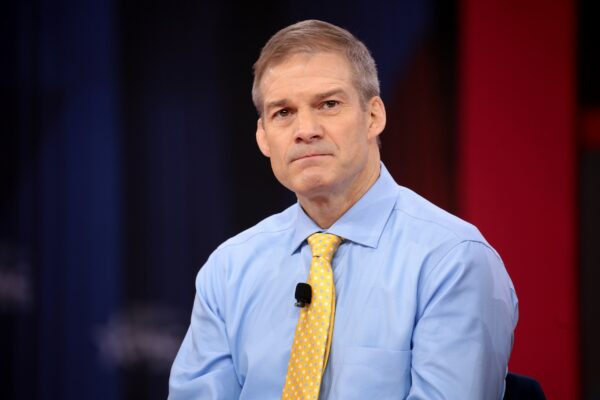
Rep. Jim Jordan, the Republican chairman of the House Judiciary Committee and a longtime critic of government surveillance, is reportedly now backing a temporary extension of the nation’s warrantless surveillance authority—a notable shift that reflects the changing political and global landscape.
Jordan said this week he supports an 18-month “clean” extension of Section 702 of the Foreign Intelligence Surveillance Act, a program he previously opposed when Congress declined to adopt his push for a warrant requirement protecting Americans’ data. At the time, Jordan argued that intelligence officials should be required to obtain a warrant before reviewing any communications involving U.S. citizens that were collected incidentally.
Now, however, Jordan says circumstances have changed.
“It’s a whole different context today — 2026, not 2024,” he said, pointing to reforms made in the last reauthorization and the broader national security environment, including the ongoing war with Iran. While maintaining that the extension would be short-term, Jordan signaled that the current moment calls for a different approach.
The shift places Jordan among a growing number of Republicans who have softened their stance on FISA, even as concerns about government overreach remain. President Donald Trump, who once urged lawmakers to “KILL FISA,” is now supporting a temporary renewal of the program without additional changes. Jordan confirmed that lawmakers have been in contact with the president, who indicated his preference for extending the authority.
“It’s just the reality of the situation today,” Jordan said, referencing global tensions. “After the reforms that we put in place — I don’t think it’s a problem.”
Still, the reversal has raised eyebrows on Capitol Hill. Jordan had long positioned himself as a leading advocate for stronger civil liberties protections, frequently warning that the program risked abuse and could lead to surveillance of everyday Americans. He had previously insisted that a warrant requirement was essential for his support.
Section 702 allows U.S. intelligence agencies to monitor foreign targets overseas, but it can also capture communications involving Americans who interact with those targets. That dynamic has been at the heart of the debate, with critics arguing it creates a backdoor into domestic surveillance.
Jordan acknowledged those concerns but said reforms enacted in the last renewal have made a meaningful difference. He cited measures that reduced the number of individuals authorized to run searches, added supervisory approval for queries involving Americans, and increased auditing, including greater involvement from lawmakers.
Data appears to reflect some of those changes. Searches involving Americans dropped sharply from 2.9 million in 2022 to just over 9,000 after the most recent reforms, with 127 of those searches found to be noncompliant with FBI guidelines.
Even so, skepticism remains. Rep. Thomas Massie, another Republican who has pushed for a warrant requirement, suggested that Jordan’s shift could effectively end opposition to the renewal effort. Without leadership pushing back, Massie implied, the path to reauthorization becomes much smoother.
Some lawmakers also pointed to reports that the White House has been actively lobbying members of Congress, including Jordan, to support the extension. Jordan denied that he had been lobbying against renewal this year, though he has voted against it in the past.
For his part, Jordan emphasized that his support does not signal a permanent change in position. He framed the extension as a pragmatic step, noting that lawmakers are continuing to work on additional reforms and will have more data to assess the program’s impact in the future.
“This is an important program,” Jordan said, while reiterating that oversight remains critical. “We’ve just wanted reforms over the years, and we’ve gotten those reforms.”
Still, his past warnings linger. In a 2024 opinion piece, Jordan cautioned that without a warrant requirement, the government’s surveillance powers could remain vulnerable to abuse, invoking constitutional concerns tied to the Fourth Amendment.
Now, as Congress faces an approaching expiration deadline for Section 702, Jordan’s reversal highlights a familiar tension in Washington: balancing civil liberties with national security demands, particularly in a time of conflict. Even supporters of the extension acknowledge that the question is far from settled—and may only grow more pressing when the program comes up for debate again in 18 months.
[READ MORE: King Charles Visit May Be On Hold]