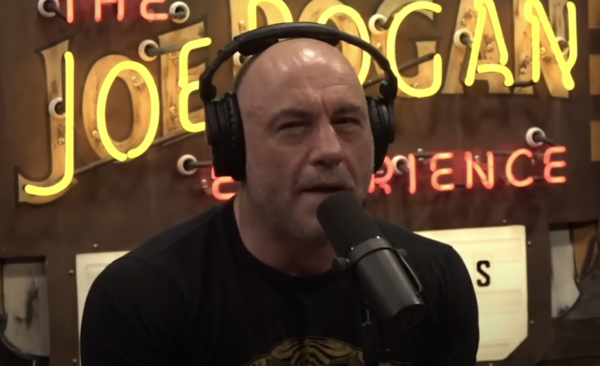
Podcast host Joe Rogan expressed disbelief during a recent episode of The Joe Rogan Experience after wildlife biologist Forrest Galante launched into a passionate criticism of the Bill & Melinda Gates Foundation, accusing its mosquito net campaign of contributing to the collapse of a freshwater fishery in Africa.
Galante, a returning guest on Rogan’s podcast, warned early in the conversation that he was about to go on what he described as a “f*cking tirade” after the discussion turned to the Gates Foundation, the charitable organization founded by Bill and Melinda Gates.
Rogan encouraged him to continue after admitting he was unfamiliar with the issue Galante was about to raise.
Galante focused his criticism on the Cahora Bassa Delta, which he described as the “breadbasket” of the Zambezi Valley and a critical nursery where fish breed and reproduce. According to Galante, millions of mosquito nets distributed to combat malaria ended up being used by local residents as fishing nets instead.
He argued that the people receiving the nets were facing hunger and chose to use them to catch fish rather than for malaria prevention.
Galante explained that mosquito nets are made with openings so small that mosquitoes cannot pass through. He claimed those same tiny openings allow the nets to catch juvenile fish indiscriminately, preventing them from maturing and reproducing.
According to Galante, widespread use of the mosquito nets for fishing in breeding areas has had devastating consequences for the local fish population.
“They fished with them,” Galante said, explaining that the fine mesh catches even the smallest fish.
He argued that introducing millions of these nets into communities that had long relied on the fishery fundamentally changed the ecosystem by removing young fish before they could grow into larger sources of food.
The Gates Foundation has publicly highlighted its efforts to fight malaria through the distribution of mosquito nets.
Galante, however, argued that the unintended consequences of the program outweighed its intended benefits in the region he described.
Continuing his criticism, Galante claimed local residents already had their own methods of dealing with malaria, including spending evenings in smoky huts with campfires. While acknowledging that some people still contracted malaria, he argued they had adapted to managing the disease in their own way.
He contended that distributing millions of mosquito nets ultimately harmed both the ecosystem and the people the program was intended to help.
Galante alleged that the use of the nets for fishing led to the collapse of fish populations that had provided a major source of protein for millions of people. He argued that the effort had destroyed a valuable freshwater fishery and contributed to widespread hunger.
As Galante continued speaking, Rogan appeared increasingly stunned by the claims.
“Oh, God,” Rogan exclaimed after listening to Galante describe what he believed had happened.
Galante did not soften his assessment, calling the situation “a f*cking disaster.”
He argued that one of Africa’s richest freshwater fisheries had been severely damaged because of well-intentioned aid efforts centered on mosquito net distribution.
Rogan responded simply, “Good God.”
Galante acknowledged that he had warned Rogan he was about to launch into a lengthy rant before reiterating his belief that the problem remains ongoing.
According to Galante, mosquito nets continue to be distributed in the area, and he claimed recipients often use them immediately for fishing rather than taking them into their homes for malaria prevention.
Throughout the exchange, Rogan largely listened as Galante detailed his criticism, reacting with visible surprise and concern while hearing the wildlife biologist’s account of what he described as the unintended environmental consequences of the mosquito net program.
[READ MORE: DHS Data Chief Announces Departure, Blasts Trump Administration in Exit Message]