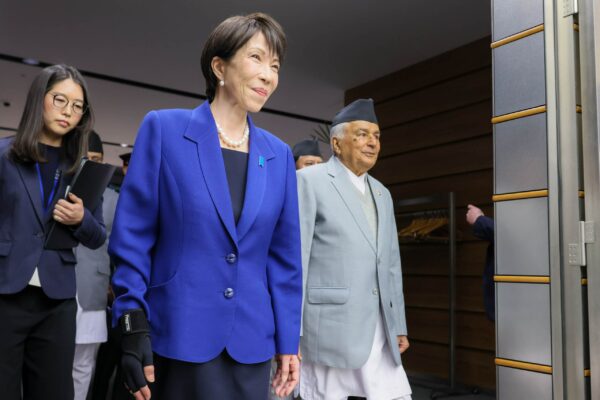
Japanese voters handed Prime Minister Sanae Takaichi a sweeping victory in Sunday’s snap election, rewarding her hardline approach on China and immigration with a commanding supermajority in the country’s lower house and giving her a powerful mandate just months into her tenure.
Takaichi’s Liberal Democratic Party, together with its coalition partner, surged past the 310-seat threshold required for a two-thirds majority in the 465-seat chamber, according to NBC News. The result validated Takaichi’s risky decision to dissolve parliament and call an early election only three months after taking office, a move critics warned could backfire. Instead, voters rallied decisively behind her agenda.
The win followed a high-profile endorsement from President Donald Trump, who publicly backed Takaichi days before the vote. In a Truth Social post, Trump praised her as “a strong, powerful, and wise Leader” and announced plans to host her at the White House on March 19. Trump said he and his representatives were “extremely impressed” during a visit to Japan and offered what he called a “Complete and Total Endorsement” of Takaichi and her coalition.
Takaichi responded warmly on X, thanking Trump and signaling continuity in the U.S.-Japan relationship. She said she looked forward to visiting the White House and continuing joint efforts to strengthen the alliance, adding that the potential of the partnership was “LIMITLESS.”
A central pillar of Takaichi’s appeal was her blunt stance toward China. In November, she told Japanese lawmakers that a Chinese attack on Taiwan could pose an “existential threat” to Japan and could trigger a military response, according to NBC News. No sitting Japanese prime minister had previously spoken so explicitly about the possibility of conflict tied to Taiwan.
Beijing reacted sharply. China reinstated a ban on Japanese seafood imports, imposed restrictions on rare earth mineral exports, and issued warnings advising Chinese citizens against traveling to Japan. Tensions escalated further when a Chinese diplomat in Osaka posted — and later deleted — a threatening message directed at Takaichi on social media.
Immigration also emerged as a defining issue. Japanese voters have grown increasingly uneasy about rising numbers of visitors and immigrants. A November poll by the Asahi Shimbun found that 56 percent of respondents wanted fewer visitors and immigrants, while 66 percent supported Takaichi’s tougher approach, according to the Council on Foreign Relations. Reflecting that mood, the far-right Sanseito party, which campaigns on a “Japanese first” platform, quadrupled its number of seats in the election.
Takaichi, who became Japan’s first female prime minister in October, also benefited from strong enthusiasm among younger voters. Dubbed “Sanamania,” her popularity with younger demographics helped propel her coalition to its decisive win, NBC News reported.
Analysts say the scale of the victory gives Takaichi broad latitude to pursue reforms. Richard Samuels, a political science professor at MIT, told Newsweek that the result provides “plenty of space to make national security reforms.” He added that Washington is likely to welcome the outcome if U.S. interests align with being “pro-Taiwan, anti-Beijing.”
With a supermajority secured and public backing firmly behind her, Takaichi now stands poised to reshape Japan’s security posture and immigration policy, while deepening ties with the United States at a time of rising regional tensions.