Tensions between the United States and some of its European allies are now reportedly beginning to surface more openly, as Italy has reportedly denied permission for U.S. military aircraft to use a key air base en route to the Middle East amid the ongoing conflict with Iran.
According to Italian outlet Corriere della Sera, several American bombers had planned to land at the Sigonella air base in Sicily earlier this week before continuing toward the region. However, the request was turned down after U.S. officials allegedly failed to properly seek authorization or consult with Italian military leadership in advance.
While details about the number of aircraft involved were not disclosed, the report emphasized that these were not routine or logistical flights. Under the existing bilateral defense agreement between the United States and Italy, the use of Italian bases for combat-related missions requires approval from Italy’s parliament—a step that had not been completed.
In response to the reports, the Italian government, led by Prime Minister Giorgia Meloni, issued a statement reaffirming its commitment to operating within established legal and diplomatic frameworks. Officials stressed that Italy remains in full compliance with international agreements and that decisions regarding military cooperation are made carefully and on a case-by-case basis.
The statement from Palazzo Chigi underscored that there were “no critical issues or frictions with international partners,” describing the U.S.-Italy relationship as strong and grounded in mutual cooperation. At the same time, the government made clear that national procedures and parliamentary oversight would not be bypassed, particularly when it comes to combat operations.
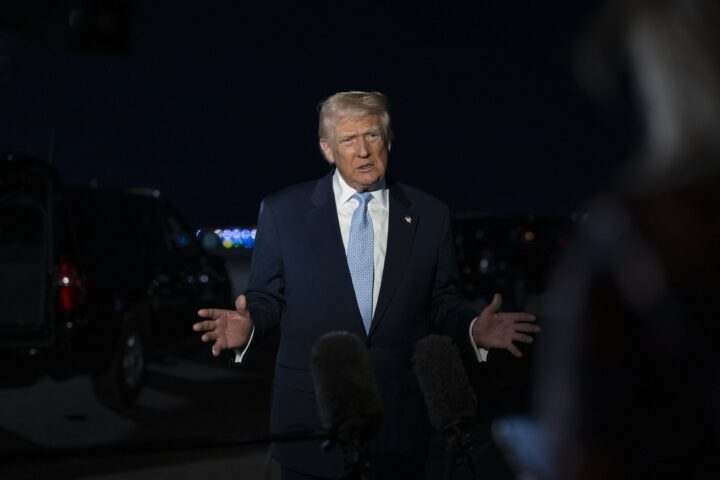
The episode highlights a broader challenge facing the Trump administration as it seeks to rally support for its actions against Iran. President Donald Trump has been pressing NATO allies to take a more active role in backing joint U.S.-Israeli efforts, but not all partners appear willing to fully align with Washington’s approach.
Spain, for example, has also declined to allow American aircraft to operate from its bases or pass through its airspace, citing concerns that strikes against Tehran may violate international law. The refusal has drawn sharp criticism from the White House, with Trump reportedly threatening to “cut off all trade” with Madrid over its stance.
Spanish officials, however, have shown little sign of backing down. Foreign Minister José Manuel Albares dismissed the threat of economic retaliation, pointing to Spain’s integration within the broader European Union. He emphasized that Spain’s trade policy is shared with its European partners and that any attempt at coercion would be viewed as a challenge to the entire bloc.
The growing divide has also sparked reactions from lawmakers in Washington. Senator Lindsey Graham, a vocal supporter of the military operation, criticized Spain’s position as unacceptable and urged the administration to reconsider its reliance on countries unwilling to support U.S. operations.
Graham suggested that relocating American military assets to more cooperative nations would better serve U.S. interests, framing the issue as one of reliability during a time of heightened global tension.
Still, the situation underscores a more complicated reality. While the United States continues to project strength abroad, the willingness of allies to participate—or even facilitate operations—cannot always be assumed. And as the conflict with Iran continues, these fractures may raise difficult questions about both the scope of the mission and the limits of international support.
[READ MORE: Eric Trump Announces The Trump Presidential Library]