Israel’s military announced Friday that it had eliminated a key Iranian figure tied to the Islamic Revolutionary Guard Corps, underscoring the continued intensity of the joint U.S.-Israeli offensive that has reshaped the region in just a matter of weeks.
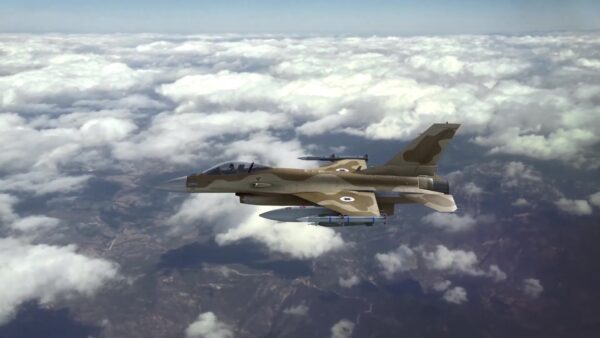
According to a statement posted on social platform X, Israeli forces said an airstrike killed Ali Mohammad Naini, identified as the head of the IRGC’s Public Relations Array. Israeli officials accused Naini of playing a central role in spreading what they described as “terrorist propaganda” to Iran’s network of proxies across the Middle East, with the aim of influencing and advancing attacks against Israel.
Iran confirmed Naini’s death, though with sharply different language. In a statement obtained by Al Jazeera, the IRGC said he “was martyred in the criminal cowardly terrorist attack by the American-Zionist side at dawn,” highlighting the stark divide in how each side characterizes the ongoing campaign.
Just hours before his reported death, Naini appeared on Iranian state media, offering a defiant message about Iran’s military capabilities. He claimed the country was continuing to manufacture missiles despite the ongoing conflict and insisted there were no significant obstacles to maintaining stockpiles.
“We are producing missiles even during war conditions, which is amazing, and there is no particular problem in stockpiling,” Naini reportedly told the state-run newspaper IRAN.
He also issued a warning that the IRGC would target “parks, recreational areas and tourist destinations” associated with Iran’s enemies around the world—remarks that reflect the escalating rhetoric surrounding a conflict that has already expanded beyond traditional military targets.
Those claims appeared to clash with comments from Israeli Prime Minister Benjamin Netanyahu, who said Thursday that Iran’s missile capabilities had effectively been neutralized. Netanyahu vowed that Israel would continue efforts to “crush these capabilities to the core,” signaling that the campaign is far from over.
At the same time, Netanyahu suggested that the current military pressure could create conditions for internal change within Iran. However, he acknowledged the limits of airpower alone, noting that revolutions cannot be achieved solely through strikes. “You can’t do revolutions from the air,” he said, adding that a ground component would ultimately be necessary.
Naini’s death is the latest in a growing list of high-profile Iranian officials killed since the launch of Operation Epic Fury on Feb. 28. Among the most significant was Iran’s supreme leader, Ayatollah Ali Khamenei, who was killed at the outset of the offensive. His son, Mojtaba Khamenei, assumed leadership shortly afterward.
Israeli officials have also announced the deaths of several other senior figures, including Supreme National Security Council Secretary Ali Larijani, Intelligence Minister Esmail Khatib, and Gen. Gholam Reza Soleimani, who led the IRGC’s Basij paramilitary force.
Beyond the targeted strikes, the broader human toll continues to rise. The Human Rights Activist News Agency reported that 1,394 Iranian civilians and 1,153 military personnel have been killed so far, along with an additional 639 deaths that have not been classified.
While military leaders emphasize strategic gains, the steady accumulation of casualties on both sides paints a more complicated picture—one where tactical victories come alongside mounting costs. As the conflict stretches on, the question is no longer just about capabilities or targets, but about how far such a campaign can go before its consequences extend beyond the battlefield itself.