Iran’s Islamic Revolutionary Guard Corps is now reportedly signaling a sharp escalation in the ongoing conflict with the United States, announcing plans to target major American technology companies operating across the Middle East—a move that underscores how modern warfare is increasingly reaching beyond traditional military fronts.
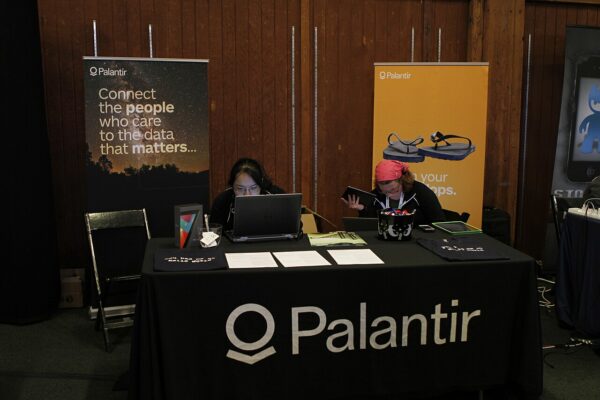
In a statement released Tuesday through its official outlet, Sepah News, the IRGC claimed it would begin targeting a list of prominent firms on Wednesday at 8 p.m. local time. Among those named were U.S. industry leaders such as Apple, Microsoft, and Google, along with a broader group of tech heavyweights including Meta, Nvidia, Oracle, Tesla, HP, Intel, and IBM.
The Iranian military arm accused these companies of playing a role in supporting U.S. operations by assisting in the planning and tracking of targets. While such claims are difficult to independently verify, they reflect a growing narrative from Tehran that technological infrastructure is now intertwined with military capability.
Notably, the list also included one non-U.S. firm, the United Arab Emirates-based AI company G42, suggesting the scope of Iran’s warnings may extend beyond American corporations to regional partners as well.
In a stark warning, the IRGC advised employees at the listed companies to leave their workplaces immediately, signaling that the threat was not merely rhetorical. The announcement raises serious concerns about the safety of civilian workers and the vulnerability of commercial infrastructure in an increasingly complex conflict.
This is not the first time American tech interests have been caught in the crosshairs. Earlier in March, Iranian drones reportedly struck and damaged several Amazon data centers in the United Arab Emirates and Bahrain. Those incidents highlighted how quickly tensions can spill over into sectors that were once considered far removed from direct military engagement.
The targeting of technology firms marks a notable shift, as the lines between economic, technological, and military competition continue to blur. What was once a conflict centered on traditional military assets now appears to be expanding into cyberspace, infrastructure, and private industry.
The development also comes at a time when the Middle East has been attracting significant investment in artificial intelligence and advanced technologies. Countries such as the UAE and Saudi Arabia have positioned themselves as key players in the global AI landscape, with growing partnerships involving American firms.
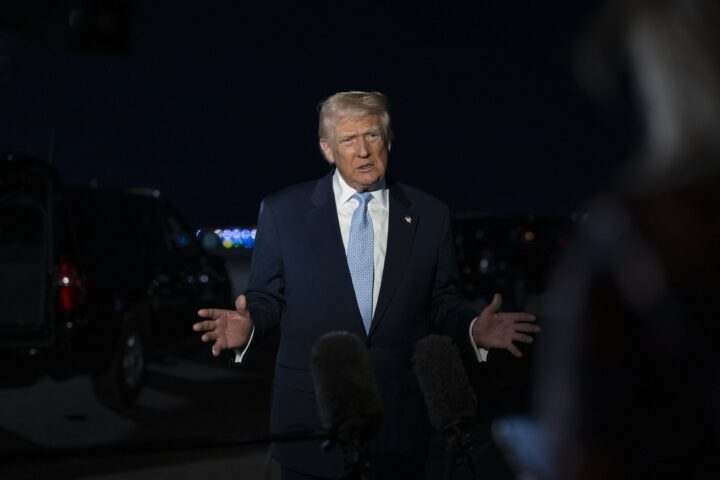
President Donald Trump has emphasized the importance of these relationships, particularly as part of a broader effort to compete with China in the race for technological leadership. But as the conflict with Iran intensifies, those same investments may now face new risks.
While a strong posture against adversaries remains a central tenet of U.S. policy, the expanding scope of potential targets raises difficult questions. When private companies and civilian workplaces become entangled in geopolitical disputes, the consequences can extend far beyond the battlefield.
For now, the IRGC’s warning stands as a reminder that in modern conflicts, the front lines are no longer clearly defined—and that escalation, once underway, can take on forms that few initially anticipate.
[READ MORE: Eric Trump Announces The Trump Presidential Library]