As the war between Iran and a U.S.–Israeli coalition entered its second week Tuesday, a senior Iranian security official issued a blunt warning directed personally at President Donald Trump, telling the American leader to “be careful not to get eliminated yourself.”
The remark came from Ali Larijani, secretary of Iran’s Supreme National Security Council, in a message posted on Twitter. Larijani, one of the highest-ranking Iranian officials to survive the opening wave of U.S.–Israeli strikes, was responding to renewed American threats to intensify attacks if Tehran attempts to disrupt global oil shipments through the Strait of Hormuz.
Iran, he wrote, “doesn’t fear your empty threats,” adding that even powers “bigger than you couldn’t eliminate Iran.”
ملت عاشورایی ایران، از تهدیدات پوشالی شما نمیترسند.
بزرگتر از شما هم نتوانستند ملت ایران را حذف کنند.
مراقب خود باشید حذف نشوید! pic.twitter.com/v1aWLoJk7K— Ali Larijani | علی لاریجانی (@alilarijani_ir) March 10, 2026
The message underscored how personal the conflict has become following the February 28 strike that killed Iran’s supreme leader, Ayatollah Ali Khamenei, during coordinated airstrikes on Tehran targeting the regime’s senior leadership and military infrastructure. Khamenei’s death — alongside several top commanders — marked one of the most consequential decapitation strikes in the history of the Islamic Republic, noted The Hill.
Iran has since declared 40 days of national mourning and elevated Khamenei’s son, Mojtaba Khamenei, as the new supreme leader in an effort to stabilize the regime.
Tehran has repeatedly vowed retaliation and has framed the killing of Khamenei as an act for which Trump bears direct responsibility. Larijani’s comments appeared to continue that line of messaging, signaling that Iranian officials increasingly view the American president not merely as a political adversary but as a personal target.
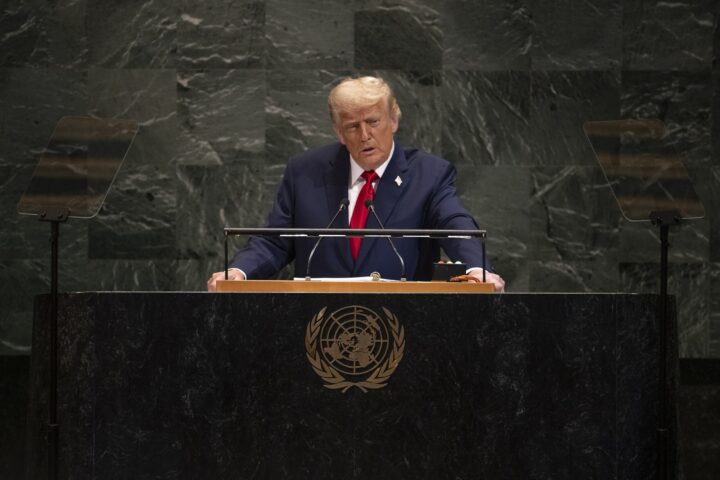
Trump brushed aside the warning during a phone interview with CBS News over the weekend.
“I have no idea what he’s talking about, who he is. I couldn’t care less,” the president said, describing Larijani as “already defeated.” Trump also reiterated his demand for Iran’s “unconditional surrender,” insisting U.S. military operations will continue until Tehran capitulates.
The exchange comes against a backdrop of long-running Iranian threats against Trump. In July 2025, Iranian officials publicly warned that the president could face retaliation for the 2020 drone strike that killed Iranian general Qassem Soleimani, a threat widely interpreted as a signal that Tehran still views Trump as a legitimate target for revenge operations.
Concerns about Iranian retaliation intensified further after an alleged would-be assassin recently claimed he was motivated by Iran to target the president — a case that investigators say underscores Tehran’s long history of cultivating proxy actors and covert operations against American officials.
The current conflict erupted after years of escalating tensions over Iran’s nuclear program, regional proxy networks, and intelligence reports warning of assassination plots against U.S. leaders.
Since the initial strikes on Tehran, joint U.S.–Israeli operations have expanded to include missile sites, military bases, and command facilities across Iran. Iranian forces have responded with ballistic missile attacks on Israel, U.S. installations in the Middle East, and allied Gulf states.
Iranian officials say the country will pursue “relentless” vengeance for Khamenei’s death. The Trump administration, meanwhile, portrays the campaign as a decisive effort to dismantle Iran’s military capabilities and end the threat posed by the Islamic Republic.