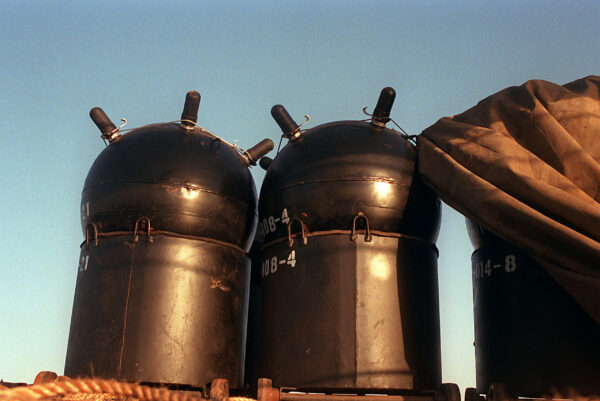
U.S. officials say Iran may be preparing to plant naval mines in the Strait of Hormuz, one of the world’s most critical shipping lanes, raising fears that the widening war could further disrupt global energy supplies and rattle already fragile markets.
The Strait of Hormuz, located off Iran’s southern coast, is a narrow but strategically vital waterway through which roughly 80 oil and gas tankers pass each day. The route serves as a key artery for global energy shipments, linking Persian Gulf producers with markets across Europe, Asia, and beyond.
But shipping traffic through the strait has slowed dramatically since the United States and Israel launched a deadly attack on Tehran, according to reports.
In the days following the strikes, Iran began targeting vessels moving toward the strait, creating a climate of uncertainty that has discouraged many shipping companies from entering the region.
As a result, only a limited number of tankers have attempted the transit in recent days. Some vessels have reportedly tried to avoid detection by switching off the devices that normally broadcast their positions.
According to CBS News, American intelligence officials have observed signs that Iran may be preparing to escalate the situation by deploying naval mines. Intelligence reportedly indicates that small Iranian vessels operating in the transit corridor are capable of carrying up to three mines each.
Such a move would represent a dangerous escalation in an already volatile region.
Iran’s Islamic Revolutionary Guard Corps has also sought to project confidence about its control over the strait. Last week, the organization announced that the Iranian navy now has full control of the strategic passage.
However, completely shutting down the Strait of Hormuz would be a difficult task, even for Iran. Maintaining a full blockade would require a constant military presence in a heavily trafficked international waterway.
Instead of attempting to physically seal the route or heavily mine the bottleneck, Iran has taken a different approach.
By conducting strikes near the shipping corridor, the country has created enough risk to alarm insurers and shipping companies alike. With the threat of attacks looming, insurance providers have sharply raised premiums and in some cases refused to cover ships entering the area.
Without insurance protection, many companies have decided the trip simply isn’t worth the risk.
Shipping data tracker Clarksons Research reports that roughly 3,200 vessels — about 4 percent of global shipping tonnage — are currently sitting idle in the Gulf as a result of the growing uncertainty.
The disruption is already beginning to ripple across global energy markets.
Analysts warn that prolonged fighting could tighten oil and gas supplies worldwide, potentially driving prices higher and increasing inflation pressures.
Natural gas markets have been particularly sensitive. Prices in Europe and Asia, which rely heavily on imported liquefied natural gas, have already surged as the conflict continues.
Oil prices have also climbed. A barrel of crude was trading at roughly £73 on Monday, representing an 81 percent increase compared to prices before the war began.
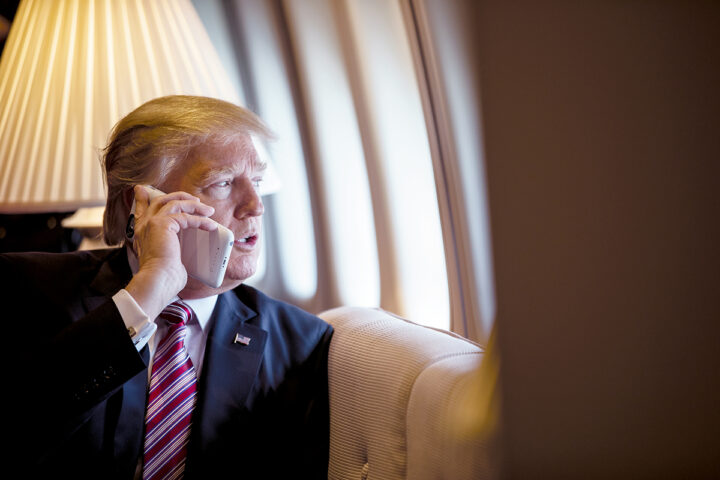
President Donald Trump responded to the mounting tensions with a stark warning directed at Tehran.
Earlier Tuesday, the president said that if Iran attempts to block the flow of oil through the Strait of Hormuz, the consequences would be severe.
“They will be hit by the United States of America 20 TIMES HARDER than they have been hit thus far,” Trump warned.
The White House has attempted to reassure Americans concerned about rising fuel costs.
Press secretary Karoline Leavitt said the administration believes any price increases at the pump will be temporary.
“This operation will result in lower gas prices in the long term,” Leavitt said.
At the same time, reports suggest the Trump administration has privately urged Israel to exercise restraint in its attacks on Iran’s energy infrastructure.
Officials reportedly fear that extensive damage to oil facilities could complicate future energy deals involving the United States.
As the conflict continues to unfold, the standoff in the Strait of Hormuz highlights how quickly wars fought thousands of miles away can reshape global markets — and how even limited disruptions to the world’s energy lifelines can send economic shockwaves far beyond the battlefield.
[READ MORE: Gun Discharge Reported at U.S. Consulate in Toronto as Regional Tensions Simmer]