A growing group of House Republicans is warning they may oppose nearly all legislation coming from the Senate unless the upper chamber moves forward with the Safeguard American Voter Eligibility, or SAVE America, Act — a Republican-backed bill focused on tightening voting requirements.
The escalating standoff highlights rising frustration among GOP lawmakers who argue that securing election integrity should be a top priority. Several members have signaled they are willing to bring Senate legislation to a halt in order to force action on the measure.
Rep. Brandon Gill, a Republican from Texas, said Friday he plans to vote against Senate-passed bills unless the SAVE America Act is addressed.
“I’ll be voting ‘no’ on all Senate bills – other than DHS funding – until the Senate passes the SAVE America Act,” Gill wrote on the social platform X.
Rep. Anna Paulina Luna of Florida echoed the same message, making clear that some House Republicans intend to use their leverage until the legislation reaches the president’s desk.
“The Senate will no longer have legislation passed until the SAVE America Act is passed and on the President’s desk,” Luna wrote on X.
The SAVE America Act would require proof of citizenship when registering to vote and mandate that voters present identification when casting a ballot. Supporters argue the changes are necessary to strengthen confidence in U.S. elections.
The bill is expected to reach the Senate floor next week for a procedural vote. However, passing the measure will likely prove difficult because Senate rules require support from some Democrats to overcome a filibuster.
That reality places Senate Majority Leader John Thune, a Republican from South Dakota, in a difficult position. While facing pressure from his party and the White House to push the legislation forward, he must also navigate Senate procedures that allow the minority party to block most legislation.
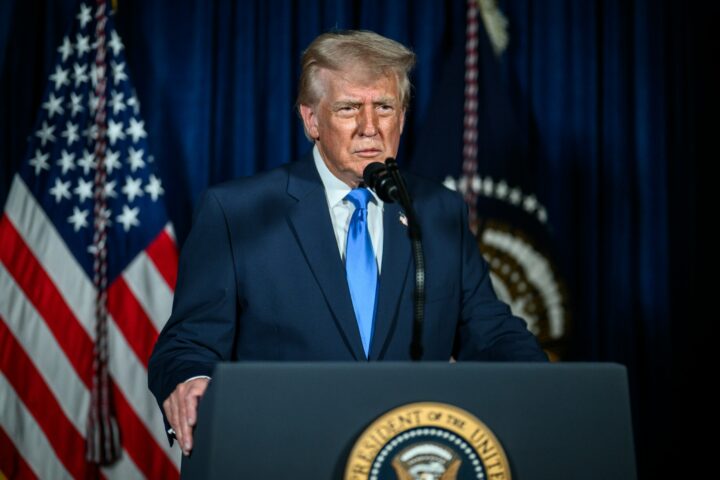
President Donald Trump has publicly urged Senate Republicans to take aggressive action if Democrats attempt to stall the bill.
Some Republicans have suggested using a “talking filibuster,” a strategy that would force Democrats to hold the Senate floor continuously if they want to delay the measure. Once they stop speaking, Republicans could theoretically move forward with a simple majority vote.
But Thune has expressed caution about that approach.
He said previously that implementing a talking filibuster would be “much more complicated and risky than people are assuming at the moment.” For now, he has chosen to advance the legislation through the Senate’s standard process.
Still, pressure from House Republicans continues to build.
Rep. Derrick Van Orden of Wisconsin said earlier this week that he would oppose Senate legislation until the SAVE America Act is addressed.
“I am not voting for Senate Bills unless they have 80%+ approval from Americans until the SAVE America Act is passed,” Van Orden wrote on X. “I am done with this buffoonery.”
Several other Republicans also voiced frustration with the Senate’s pace. Reps. Randy Fine of Florida, Keith Self of Texas and Mark Harris of North Carolina wrote in a Fox News opinion article that they are prepared to vote against any Senate legislation until the bill moves forward.
They criticized what they described as misplaced priorities in the Senate.
“While Americans demand real action to secure our elections, Senate Republicans are twiddling their thumbs on feel-good fluff that would make a circus clown blush,” they wrote. “In the past month alone, they’ve found time to pass a resolution celebrating a Mardi Gras dog parade in the Senate.”
Despite the mounting pressure, Thune signaled that the outcome remains uncertain.
Speaking on the Senate floor Thursday, he said he could not promise the legislation would ultimately pass. However, he emphasized that Republicans intend to force a clear vote on the issue.
“I can’t guarantee an outcome on this legislation,” Thune said. “But I can guarantee that we are going to put Democrats on the record.”
As tensions rise between the House and Senate, the standoff underscores a broader debate within Washington over election policy, Senate rules, and how far lawmakers are willing to go to push major legislation across the finish line.