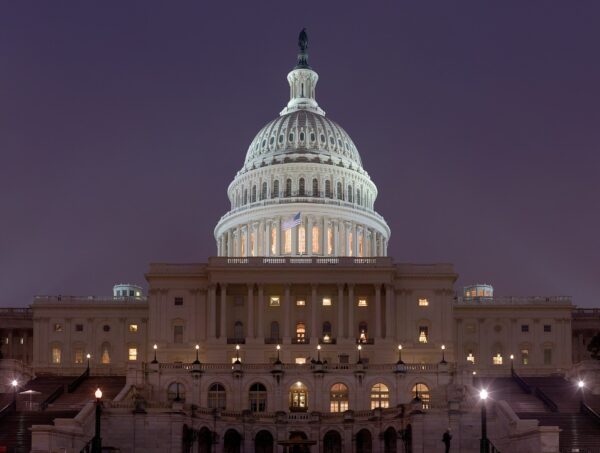
A standoff in Washington showed no signs of easing Friday, as the Republican-led House of Representatives rejected a Senate-approved funding package for the Department of Homeland Security, extending a partial government shutdown that has already stretched beyond 40 days and disrupted travel across the country.
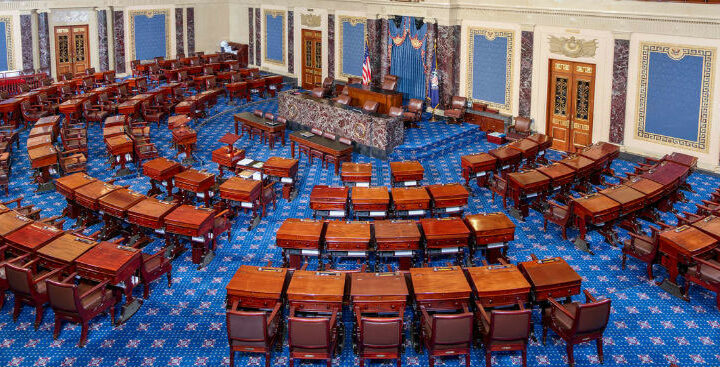
According to reporting from The Wall Street Journal, House Republicans made the decision after internal discussions, concluding they could not support the Senate’s proposal in its current form. The rejection came just hours after the Senate had unanimously passed the measure in an early morning vote aimed at reopening DHS operations.
At the heart of the disagreement is a familiar divide over priorities. While the Senate package would fund most DHS functions, it excludes money for U.S. Immigration and Customs Enforcement and U.S. Customs and Border Protection—a sticking point that has drawn strong opposition from House Republicans.
House Speaker Mike Johnson made clear that the chamber would not bring the Senate bill to the floor. Instead, House leadership is preparing an alternative approach: a short-term continuing resolution that would fund all DHS agencies for several weeks while also ensuring back pay for affected government workers.
“What we are going to present and what we’re going to vote for on this floor are — our rules committee is working through this right now — we’re gonna put a clean, simple continuing resolution,” Johnson told reporters. He explained that the proposal would extend funding through May 22, allowing the department’s various agencies to continue operating at current levels.
Johnson framed the move as a practical step to restore stability while negotiations continue. “We’re gonna send that over to the Senate. And we hope that they’ll accept that,” he said, suggesting the upper chamber could act quickly, even as soon as Monday, if there is agreement.
The speaker also emphasized that the House plan would address one of the most visible consequences of the shutdown: unpaid Transportation Security Administration workers. “In the meantime, TSA will be paid,” Johnson said, pointing to the mounting strain on airport operations nationwide.
Indeed, the effects of the shutdown have become increasingly difficult to ignore. TSA agents have gone weeks without pay, contributing to staffing shortages that have left travelers facing security lines stretching for hours at some airports. What began as a political dispute has now translated into real-world disruptions for millions of Americans.
President Donald Trump moved Thursday night to mitigate some of the impact, announcing he would sign an executive order directing DHS leadership to “immediately pay our TSA agents.” The directive underscores the urgency of the situation, even as lawmakers remain locked in disagreement.
Johnson insisted that House Republicans are focused on fulfilling what he described as Congress’s most basic responsibility: protecting the country while minimizing harm to workers and the public. He also called on Democrats to support the House’s proposal, arguing that cooperation could quickly end the current disruptions.
Still, the broader impasse highlights a recurring challenge in Washington. Competing priorities—whether tied to border enforcement or broader agency funding—can stall even widely supported measures, leaving frontline workers and everyday Americans caught in the middle.
As both chambers prepare to leave for recess, the path forward remains uncertain. And while leaders on both sides express confidence in their approach, the ongoing shutdown serves as a reminder that political stalemates often carry consequences far beyond Capitol Hill—especially when essential services are at stake.