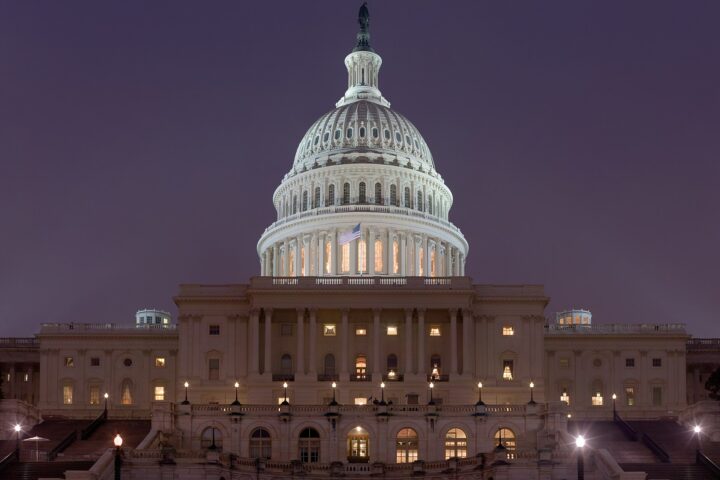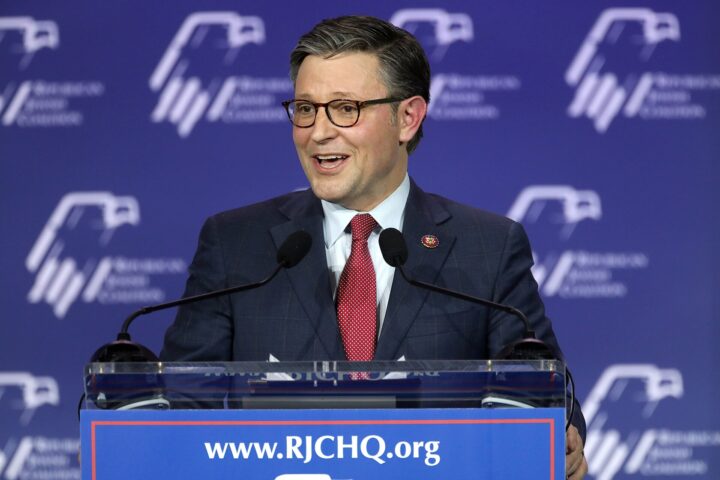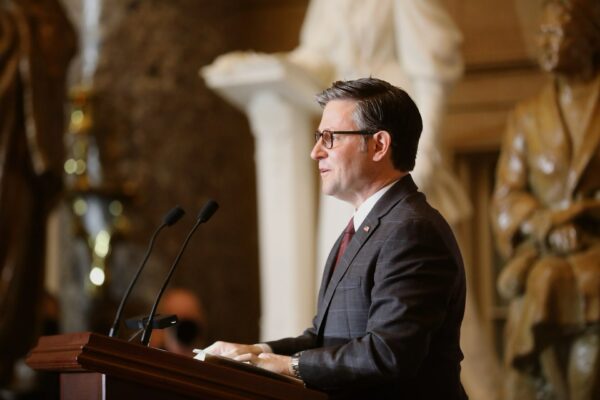
House Republicans moved closer Thursday to a full chamber vote on a sweeping $1.2 trillion spending package as Speaker Mike Johnson worked through the night to head off a revolt from within his own conference and keep the government open ahead of a looming shutdown deadline.
The House Rules Committee voted 9-4 to advance two major spending bills needed to avoid a government shutdown set to begin Jan. 30. The package includes funding for the Department of Homeland Security, a provision that has stirred controversy on both ends of the political spectrum, particularly over its treatment of U.S. Immigration and Customs Enforcement.
Behind the scenes, Republican leadership faced a growing rebellion from Midwestern GOP lawmakers who threatened to torpedo the package during a critical procedural vote. According to comments made to Fox News Digital, as many as 20 Republicans were prepared to block the measure unless leadership agreed to address their long-standing demand to allow the year-round sale of E15 ethanol, a gasoline blend popular in agricultural states.
Under current law, sales of E15 are restricted due to Environmental Protection Agency regulations tied to the Clean Air Act. Lawmakers from farm-heavy regions have argued the restrictions hurt domestic energy production and rural economies.
Speaker Mike Johnson said he reached an agreement with the holdouts late Wednesday night, easing immediate concerns of a GOP fracture. Emerging from the Rules Committee early Thursday, Johnson described the breakthrough as a positive step.
“It’s a very positive development,” Johnson told Fox News Digital.
He said Republican leaders and members agreed to establish a new E15 Domestic Energy Council that would bring together lawmakers from across the conference along with industry stakeholders, including refiners and energy producers. Johnson said the council would examine Midwestern Republicans’ ethanol demands while also weighing environmental protections already in place.
Johnson described the process as a worthwhile effort, though he stopped short of outlining what kind of policy changes might ultimately result. The compromise appears to have defused the immediate threat from the Midwest bloc, allowing the spending package to move forward.
Even with that deal in place, the DHS portion of the bill remains contentious. Conservatives have criticized the funding as insufficiently aggressive on border enforcement, while progressives have objected to provisions involving U.S. Immigration and Customs Enforcement. Those tensions continue to simmer as leadership works to line up votes ahead of the floor showdown.
The procedural drama unfolded against a backdrop of broader concerns raised by conservative activists about political radicalism and public safety. At a Jan. 12 event, Riley Beesley, a conservative student activist, warned of what he described as a rising threat of political violence from the left, arguing that institutions of higher education are playing a role in radicalizing young people.
Beesley said college campuses have become hostile environments for conservatives, where debate is increasingly replaced by intimidation. He cited personal experiences that left him questioning whether engaging in campus debate now comes with the risk of physical harm.
A spokesperson for the University of Utah responded by pointing to the school’s anti-bias policy, which emphasizes safety, inclusion, and openness to all viewpoints. The university said it encourages robust discussion, disagreement, and debate as part of its academic mission.
As House leaders race the clock to avert a shutdown, the spending fight underscores the fragile balance Johnson must maintain within a divided conference. With immigration, energy policy, and internal party tensions all colliding, the outcome of the vote will test whether Republican leadership can hold together long enough to keep the government running.