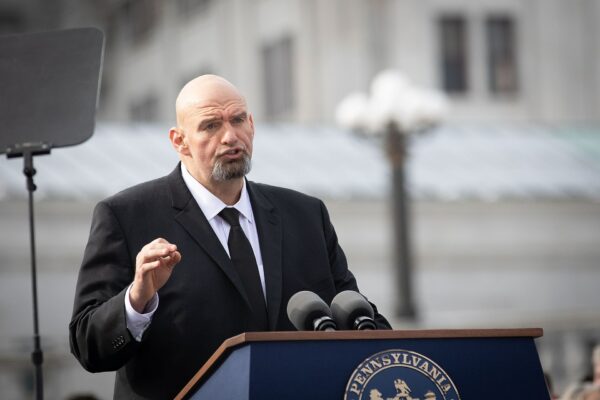
Sen. John Fetterman is once again defying his party’s prevailing mood, delivering a blunt critique of Democratic leadership while staking out positions that align more closely with Republicans on both foreign policy and key nominations.
In a Wednesday interview on the “All-In” podcast, the Pennsylvania Democrat argued that his party is effectively being driven by what he called “Trump Derangement Syndrome,” rather than a coherent agenda or identifiable leader. When asked who currently leads the Democratic Party, Fetterman didn’t point to a person at all.
“Oh, we don’t, we don’t have one,” he said. “I think the TDS… that’s the leader right now.”
According to Fetterman, this mindset has created an environment where crossing party lines—even in limited ways—comes with political consequences. He suggested that Democrats face pressure to reject anything associated with President Donald Trump or Republican-backed initiatives, regardless of the substance.
“It’s made it virtually impossible, without being punished, as a Democrat, to agree something’s good, or ‘I agree with the other side,’” Fetterman said, pointing to the ongoing U.S. military campaign against Iran, known as Operation Epic Fury, as a clear example.
While many Democrats have pushed back on the operation, Fetterman has taken the opposite view. “I am literally the only Democrat in America, in Congress, that I’ve come across that’s saying, ‘I think it’s a great thing to break and destroy the Iranian regime,’” he said.
His stance underscores a growing divide within the party over the war. Supporters argue the operation reflects a necessary show of strength, while critics have raised concerns about its scope and potential long-term consequences. Fetterman’s comments suggest that, for him, those concerns are outweighed by the need for decisive action—even as the broader debate over the conflict continues.
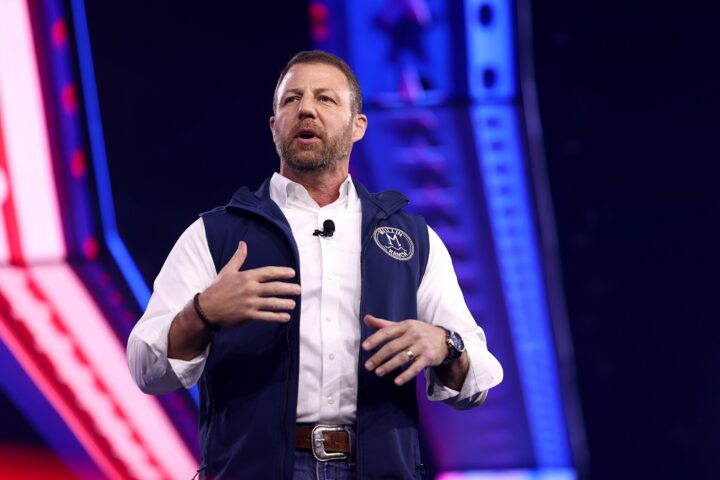
At the same time, Fetterman is also urging Democrats to adopt a more pragmatic approach at home, particularly when it comes to working with Republicans. He has called on colleagues to consider supporting Sen. Markwayne Mullin, the Republican nominee for Secretary of Homeland Security.
Fetterman confirmed last week that he intends to vote in favor of Mullin’s confirmation, even as he acknowledged uncertainty about whether others in his party will do the same.
“I will vote for him, of course, but I’m unsure how many Democrats could for him,” Fetterman said during a radio interview. He pointed to shared priorities, especially on border security, emphasizing a focus on deporting criminals and preventing tragedies like those that have occurred in Minneapolis.
“I don’t know why,” he added, expressing frustration with what he sees as reluctance to find common ground. “So why can’t you just give someone a chance?”
His remarks reflect a broader tension in Washington, where partisan divisions often deepen during times of conflict rather than narrow. While Fetterman’s willingness to break ranks may resonate with voters who favor bipartisan cooperation, it also highlights the challenges of maintaining unity within a party that is grappling with both domestic policy disagreements and a contentious foreign war.
Even as he voices strong support for Operation Epic Fury, the reality remains that military action carries consequences that extend beyond immediate objectives. The debate over the war—and how far the United States should go—continues to divide lawmakers, including those within the same party.
For now, Fetterman appears comfortable standing apart. Whether his approach signals a broader shift or remains an outlier may depend on how both the conflict abroad and the political battles at home continue to unfold.
[READ MORE: King Charles Visit May Be On Hold]