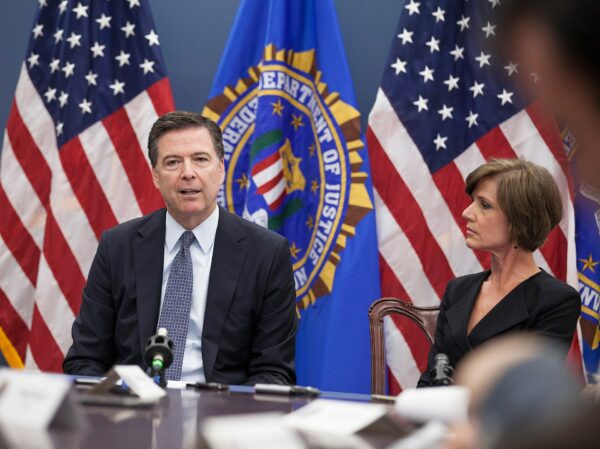
A new development in a sweeping legal effort tied to past investigations of President Donald Trump is drawing fresh attention in Washington, as former FBI Director James Comey has reportedly been subpoenaed before a grand jury.
According to reporting from Marc Caputo of Axios, the subpoena is part of what has been described as a wide-ranging “grand conspiracy” case examining the conduct of officials involved in investigating and prosecuting Trump over several years.
The underlying theory advanced by the Trump administration, as outlined in the report, holds that Democratic officials improperly used their authority—allegedly bending rules, breaking laws, and even lying under oath—to target Trump from the outset of his 2016 election victory through the federal indictments brought against him in 2023. The claims, which have been hotly debated, now appear to be taking on new legal life through the grand jury process.
Comey’s subpoena, issued last week, is said to focus on his role in the preparation of a January 2017 Intelligence Community Assessment concerning Russian interference in the 2016 election. That assessment concluded that Russia sought to influence the election in Trump’s favor, a finding that became a cornerstone of years of political and legal battles.
The grand jury proceedings are being overseen by District Court Judge Aileen Cannon, who previously dismissed the federal classified documents case against Trump that had been brought by former special counsel Jack Smith. Her involvement adds another layer of significance to a case already steeped in controversy and competing narratives.
The legal history surrounding Comey is also complex. Charges brought against him last year in the Eastern District of Virginia were dismissed in November by Judge Cameron McGowan Currie. In her ruling, Currie determined that Lindsey Halligan had been improperly installed as U.S. attorney, undermining the validity of the indictment.
“Because Ms. Halligan had no lawful authority to present the indictment, I will grant Mr. Comey’s motion and dismiss the indictment without prejudice,” Currie wrote, leaving open the possibility that charges could be revisited under proper authority.
Prior to that dismissal, Halligan had secured an indictment accusing Comey of making false statements to Congress and obstructing a congressional proceeding. The charges came amid heightened tensions over the broader investigations tied to Trump’s presidency.
At roughly the same time, Trump himself publicly weighed in, posting a lengthy message on Truth Social that appeared to be directed at Attorney General Pam Bondi. In the message, Trump expressed frustration over what he described as a lack of accountability for figures he believes acted improperly, including Comey and others. He also defended Halligan, calling her a “really good lawyer,” while arguing that delays in pursuing such cases were damaging to the nation’s credibility.
The latest subpoena signals that those concerns are continuing to play out in the legal arena, even as questions persist about the scope and direction of the investigation. While supporters see the effort as long-overdue accountability, critics have characterized it as part of an expansive theory that remains unproven.
As the proceedings move forward, the case highlights the enduring fallout from years of political and legal conflict. And at a time when the country faces serious challenges beyond its borders, the continued focus on past battles raises a broader question: whether the nation’s institutions can balance accountability with stability, without allowing prolonged disputes to overshadow more immediate concerns.
[READ MORE: Hegseth Takes Aim at Media Coverage of Iran Conflict, Rejects “Forever War” Claims]