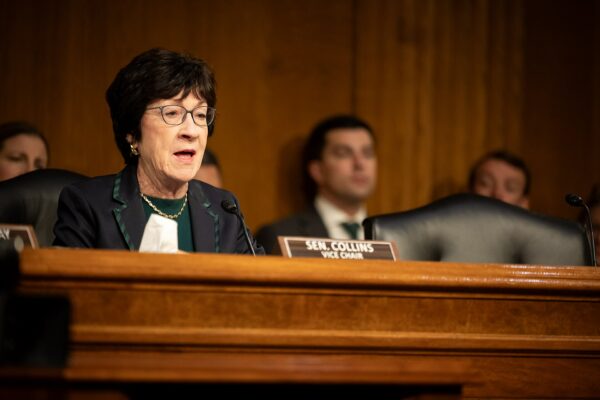
Sen. Susan Collins of Maine announced Thursday that Immigration and Customs Enforcement has halted its enhanced operations in her state, following repeated conversations with Homeland Security Secretary Kristi Noem over recent days. The Maine Republican said she was informed directly by Noem that the stepped-up enforcement posture had come to an end.
“I can report that Secretary Noem has informed me that ICE has ended its enhanced activities in the State of Maine,” Collins said in a statement released Thursday, signaling a shift in federal immigration enforcement activity within the state.
Collins added that there are no longer any large-scale ICE actions underway or planned in Maine. “There are currently no ongoing or planned large-scale ICE operations here,” she said, underscoring that the federal agency’s heightened presence has been rolled back. According to Collins, she had been pressing Noem and other officials within the administration to rethink how immigration enforcement was being carried out in the state.
“I have been urging Secretary Noem and others in the Administration to get ICE to reconsider its approach to immigration enforcement in the state,” Collins said, indicating that her outreach to the Department of Homeland Security had been consistent and persistent.
The senator expressed appreciation for Noem’s response, crediting the Homeland Security secretary with taking her concerns seriously. Collins said she was thankful for Noem’s “willingness to listen to and consider my recommendations” and highlighted the secretary’s direct involvement in addressing the issue. She also noted Noem’s “personal attention to the situation in Maine,” suggesting that the decision followed high-level discussions rather than routine bureaucratic action.
Collins’ announcement comes as some Republicans have taken a far more confrontational stance toward the Department of Homeland Security and its leadership. The Maine senator has declined to join colleagues such as Sen. Thom Tillis of North Carolina and Sen. Lisa Murkowski of Alaska, who have publicly called for Noem to resign or be removed from her post. Instead, Collins has taken a more measured approach, choosing direct engagement with the administration rather than public demands for leadership changes.
Earlier in the week, Collins confirmed that she had spoken with Noem about immigration enforcement issues but initially declined to share details of their discussion. Speaking to reporters Monday afternoon, Collins acknowledged the conversation while holding back specifics at the time. She later revealed that she had asked Noem to pause the agency’s surge of immigration enforcement personnel not only to Maine but also to Minnesota.
The decision to end enhanced ICE activities in Maine appears to reflect the outcome of those conversations. Collins’ comments suggest that her focus was on adjusting the scale and approach of enforcement rather than eliminating immigration enforcement altogether. By urging a reconsideration of ICE’s methods, she positioned herself as an intermediary between the administration and concerns raised within her state.
The episode highlights divisions within Republican ranks over how aggressively immigration laws should be enforced and how federal agencies should operate in individual states. While some lawmakers have opted for public criticism and calls for resignations, Collins has emphasized dialogue and behind-the-scenes negotiation.
For now, according to Collins, the result is clear: ICE has ended its enhanced operations in Maine, and no new large-scale actions are planned. She framed the outcome as a positive response to her recommendations and a sign that her concerns were heard at the highest levels of the Department of Homeland Security.