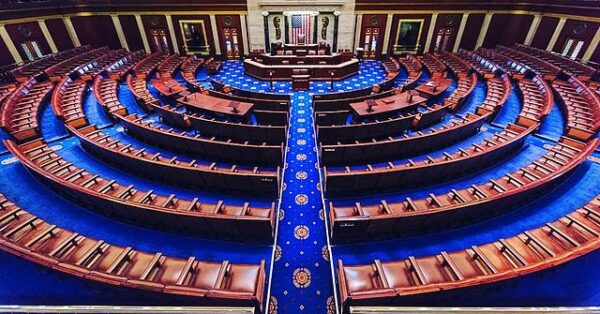
In a chamber increasingly defined by partisan stalemate, the House carved out a rare moment of cross-party alignment Wednesday, voting 222–200 to advance legislation that would unwind President Donald Trump’s March 2025 executive order curtailing collective bargaining rights across wide swaths of the federal workforce. The vote pushed the Protect America’s Workforce Act—championed by Rep. Jared Golden of Maine—onto the legislative runway despite months of leadership resistance.
Golden forced the issue using one of Congress’s most unruly tools: a discharge petition, the procedural escape hatch that allows a majority of lawmakers to drag a bill to the floor over the objections of party hierarchies. It worked. All 209 Democrats who voted backed the measure, joined by 13 Republicans whose breaks with the administration reflected a mix of competitive-district pressure, labor-sector politics, and deep discomfort with the scope of Trump’s directive, noted Fox News.
Those GOP members were Jeff Van Drew, Nicole Malliotakis, Nick LaLota, Brian Fitzpatrick, Rob Bresnahan, Don Bacon, Mike Lawler, Tom Kean, Ryan Mackenzie, Zach Nunn, Chris Smith, Pete Stauber, and Mike Turner. Five of them—Fitzpatrick, Bresnahan, Bacon, Lawler, and LaLota—had already crossed the procedural Rubicon by signing Golden’s discharge petition alongside 213 Democrats, a signal that the revolt against the executive order had been simmering for months.
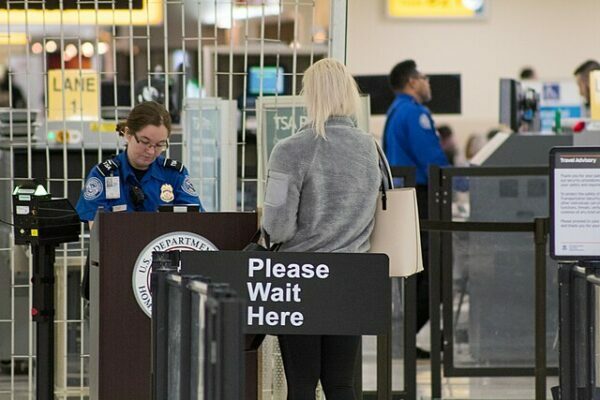
At issue is Trump’s sweeping invocation of national-security exemptions to bar collective bargaining at agencies touching nearly every major sphere of federal power: defense, foreign affairs, veterans’ services, justice, energy, homeland security, treasury, health and human services, interior, and agriculture. The administration has insisted the order is essential to prevent union interference with high-stakes operations. Critics argue it functionally gutted workplace protections for roughly one million federal employees.
Labor leaders framed the House vote as a repudiation of the order’s central premise. “The labor movement fought back against the largest act of union-busting in American history by doing what we do best: organizing,” said AFL-CIO President Liz Shuler. Dr. Everett B. Kelley, who leads the American Federation of Government Employees, added, “AFGE will forever be grateful to Congressman Golden for his tireless efforts to restore collective bargaining rights for federal employees.”
The bill’s path forward remains procedurally dense. A rule vote and final passage are set for Thursday, with Senate prospects still uncertain and the ultimate hurdle—the need for President Trump’s signature—looming over the effort. Yet even advancing this far underscores how fragile the House GOP’s narrow majority has become, and how discharge petitions—once rare breaches of party discipline—are now emerging as power tools in a Congress where slim margins empower bipartisan blocs.
For Republicans who joined Democrats, the calculation was unmistakably political as well as institutional. Many come from districts where union households still shape local identity, and where cross-party independence is a prerequisite for survival. In that sense, Wednesday’s vote was not just about federal labor rules—it was a reminder that even in a polarized Congress, coalitions can still form when executive power pushes too far and members sense the ground shifting beneath them.
[Read More: Trump Begins Interviewing Fed Chair Replacements]