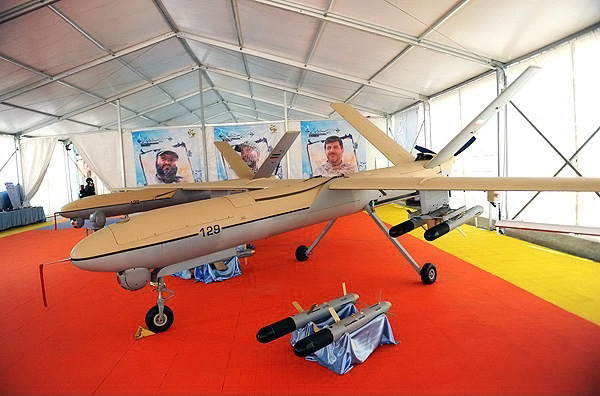
An Army Reserve officer who served in the Iran war says the soldiers at a small U.S. outpost in Kuwait had no real defense against the Iranian drone that killed six of them in the opening days of the conflict.
Maj. Stephen Ramsbottom is the deputy chief of operations for the Army Reserve’s 103rd Sustainment Command. Last week he filed a whistleblower complaint with Congress asking lawmakers to find out why there was no dedicated protection against one-way attack drones at Port Shuaiba before the March 1 strike. He described the complaint in an interview with Norah O’Donnell that aired Sunday on CBS News’ “60 Minutes.”
“The protection that was there was to stop car bombs and threats like that,” Ramsbottom said. “There was nothing there designed to protect from an aerial attack.”
The Pentagon had moved about 70 members of the 103rd to the outpost, roughly 65 miles from Iran. Ramsbottom said some people called the site a “trailer park.”
He said he raised concerns about the site’s defenses with his superiors twice and was told not to worry. He was also told a counter-drone system was on its way, but it never showed up. Ramsbottom called the episode a “tactical failure.”
Iran launched the drone on March 1, one day after the United States and Israel began the strikes that started the war. The attack killed six Army Reserve soldiers and wounded about 30 others.
Joey Amor’s wife, Master Sgt. Nicole Amor, was among those killed. He told O’Donnell he had “nothing nice to say about the 103rd.”
“I love those soldiers. And my wife loved those soldiers,” Amor said. “But the command of the 103rd has handled this so poorly.” He added that the deaths were “not political” and that individuals in the command “made choices.”
Other Gold Star families told “60 Minutes” they received military honors and outreach from the Trump administration. Eight months later, though, they still have few answers about what went wrong that morning.
The Pentagon has not publicly said how much damage the attack caused. “60 Minutes” based its reporting on its own review of satellite imagery and newly obtained video. The Defense Department finished its internal investigation of the strike in June. It declined to say whether the 103rd was denied adequate force protection.
President Trump pushed back hard on Monday. He said the report ignored how well U.S. air defenses have performed over the course of the war.
Trump wrote on Truth Social that only two of the “8,000-9,000” one-way attack drones Iran has launched caused U.S. fatalities.
“Translation: 99.99% of Iranian missiles and drones have been shot down or, in any event, not caused U.S. deaths,” Trump wrote. “CENTCOM defensive measures have been historically effective. No one in the World has the ability to do so well. All of this being left out of the 60 Minutes ‘report.’”
The Port Shuaiba strike remains one of the deadliest single attacks on American forces in the conflict. With Democrats set to take control of Congress in January, lawmakers are expected to look more closely at force-protection decisions made before the war began.
[READ MORE: Trump Says He Would Have No Objection to Huang’s Return as Nvidia CEO]