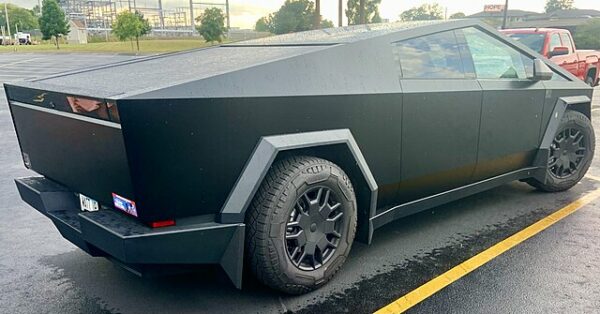
Tesla is pulling the plug on the Cybertruck.
CEO Elon Musk announced early Friday on X that the company will begin winding down production of its angular, stainless-steel pickup at Gigafactory Texas, just outside Austin, around the middle of next year. Musk said the move will make room for increased production of the Cybercab, Tesla’s two-passenger autonomous vehicle built for its Robotaxi ride-hailing service. The Cybercab has no steering wheel, accelerator or brake pedals.
The Austin plant is the only facility that makes the Cybertruck and the only known Tesla factory equipped to produce the truck’s specialized components. It was not immediately clear whether Tesla plans to move production elsewhere or retire the model entirely, though the Cybertruck’s lead engineer, Wes Morrill, appeared to suggest the vehicle had reached the end of the road.
Musk struck a nostalgic tone. Responding to a user on X, he called the Cybertruck the best vehicle Tesla has ever made and described the wind-down as the end of an era.
The numbers tell a different story. Musk unveiled the prototype in 2019 and once projected the truck would sell around 250,000 units a year. Deliveries didn’t begin until late 2023 after a series of delays, and sales never came close to that target.
Tesla does not break out sales by model, but Cox Automotive estimated U.S. Cybertruck sales at 20,237 units in 2025, down 48% from 38,965 in 2024. The slide continued this year, with sales from January through September down 28%, according to Kelley Blue Book estimates. Tesla has reported fewer than 37,000 sales in its “other models” category so far this year, despite listing installed Cybertruck capacity of more than 125,000 units.
Quality problems also dogged the truck. Tesla has issued 11 recalls for the Cybertruck since it went on sale, according to the National Highway Traffic Safety Administration. In one high-profile case, the company recalled every Cybertruck it had sold over concerns that exterior paneling could come loose.
The truck’s specifications also fell short of what Tesla advertised early on and, in some cases, trailed leading gas-powered pickups. Tesla tried to boost demand with incentives and a cheaper version priced around $70,000, and by 2025 it had reportedly cut production targets and shifted workers from Cybertruck lines to the Model Y.
Tesla’s broader sales also took a hit in early 2025, partly because of backlash against Musk’s role in the Trump administration.
TechCrunch’s Sean O’Kane noted that the truck was once billed as a cornerstone of Tesla’s future but instead sold only tens of thousands of units total over three years, arguing that Tesla overpromised on the basics from the start.
The decision marks a clear shift in priorities for Musk, who has made the Cybercab central to Tesla’s robotaxi ambitions and its long-term growth strategy.
Tesla did not immediately respond to a Reuters request for comment.