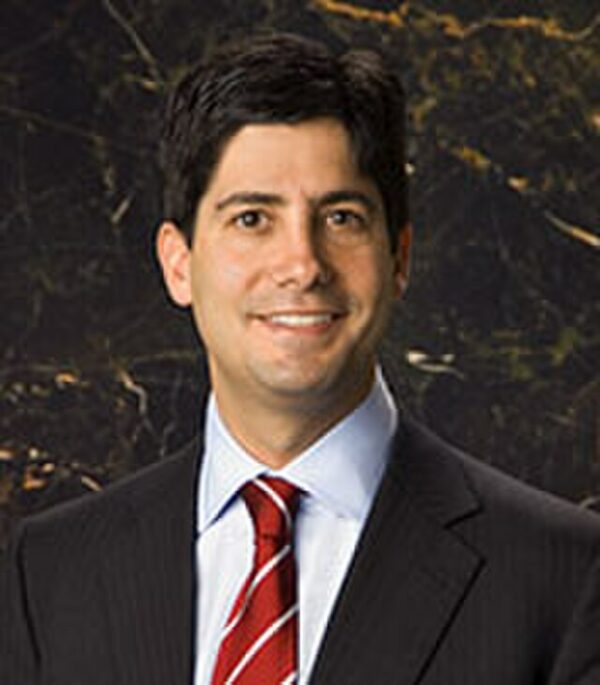
Federal Reserve Chair Kevin Warsh declined on Friday to say where central bank officials are headed on interest rates, with less than two weeks to go before they meet to discuss monetary policy.
“I don’t prejudge meetings. I don’t believe in saying now what I might do at the meetings that we have in the balance of this year,” Warsh said during a conversation with Kristalina Georgieva, managing director of the International Monetary Fund (IMF), in Bangkok, Thailand.
Last month, officials on the Federal Open Market Committee (FOMC), including Warsh, voted unanimously to raise interest rates by a quarter point to a range of 3.75% to 4%.
Following that vote, Warsh said the hike was aimed at taming inflation, which has run above the Fed’s 2% target for more than five years.
Still, during his five months at the helm of the central bank, Warsh has taken a cautious approach to issuing forward guidance. He argues that this stance allows markets to respond to signals from the economy rather than from the Fed.
“It’s a new chapter at the Fed and … we’re not in that business anymore,” Warsh told Georgieva, referring to forecasting future decisions.
Georgieva responded with a quip that drew laughs from the crowd at the annual meetings of the IMF and World Bank Group, joking that the Fed chair “just disappointed half of the audience, or more.”
Several FOMC officials have recently signaled that more rate hikes are coming, while also acknowledging that they must weigh incoming economic data. The panel is set to meet Oct. 27-28 and will announce its rates decision on the second day.
Fed board member Christopher Waller said last week that he expects future rate hikes “if the economic data continue to come in” as he anticipates.
“But there is some flexibility about when those hikes will occur,” Waller said at the Istanbul Economic Forum in Turkey.
Waller’s remarks came before the Bureau of Labor Statistics reported that annual inflation reached 3.7% in September, up 0.3 percentage points from August.
Energy price pressures tied to the Iran war and the Russia-Ukraine conflict continue to weigh on Americans. As of Friday, a gallon of regular gas in the U.S. costs roughly $4.33 on average, according to AAA.
Surging demand for artificial intelligence models and data centers is also driving up inflation, as Warsh acknowledged during his remarks in Thailand.
The Fed chair described the arrival of AI as “probably the most consequential change” to the U.S. and global economies of his lifetime.
Looking to the medium term, Warsh predicted that AI would produce a “positive supply shock,” boosting productivity and wealth for countries that “put it to good use.”
But he warned that getting there will not be easy.
“The path from where we are to there is likely to be a very bumpy one,” Warsh said. “Bumpy in our understanding of the technology, bumpy because we really don’t know what the market structure’s going to be of these new technologies.”
[READ MORE: Washington Post Photojournalist Hospitalized After Being Beaten by Israeli Settlers in West Bank]