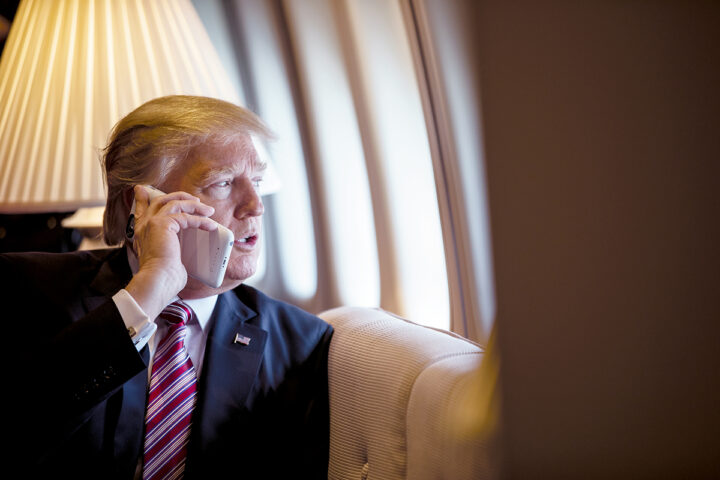
President Donald Trump is preparing a plan to halt U.S. diesel exports for 90 days in a bid to bring down soaring energy prices, according to five people familiar with the discussions. The proposal has opened rifts inside the administration and drawn pushback from the oil industry.
The White House pushed back on the reporting. “This is another fake news news story from Politico,” a White House official said.
Diesel averaged $6.52 per gallon on Wednesday, according to AAA. That is up 91 cents from a month ago and $2.83 from a year ago. Prices have climbed to record highs amid the war the U.S. launched against Iran in February and Ukraine’s attacks on Russian refineries.
Farm-state Republicans have led the charge for action. The push gained momentum last weekend when Sen. Chuck Grassley of Iowa, one of the Senate’s top advocates for agriculture, came out in favor of a ban. Grassley wrote on X that high diesel prices were “KILLING FARMERS INCOME.” According to an adviser, his post set off a stampede of farm-country Republicans demanding the administration act, even if that meant banning exports.
The legal process for a ban is still being worked out. If enacted, it would be the first restriction on U.S. energy exports since the Obama administration lifted a decades-old ban on oil exports in 2015.
Cabinet officials voice concerns
Energy Secretary Chris Wright, Treasury Secretary Scott Bessent and Interior Secretary Doug Burgum have protested the idea of a total ban, according to people familiar with the internal discussions.
“Bessent is a good soldier,” one person with knowledge of the talks said. “He will voice opinions and then march forward.”
Wright publicly opposed the idea Wednesday at a Climate Week panel in New York. “The blunt tool of banning diesel exports definitely doesn’t work because the U.S. exports a lot of diesel,” he said, noting that the same refineries that make diesel also produce gasoline and jet fuel. He warned that a ban could force cuts in U.S. refining, putting upward pressure on those prices. At a separate event that morning, Wright suggested a “voluntary” plan that would take a “slice” of diesel out of the global market.
Still, Wright called energy CEOs Tuesday night to tell them a 90-day ban was likely coming, according to a Trump energy adviser, who added that several CEOs immediately called the White House to push back. “It’s a terrible idea,” the adviser said.
Politics vs. economics
With Republicans facing tough midterm races in less than seven weeks, one oil industry executive said Trump is inclined to announce a ban by the end of the week and treat any fallout as “a December problem.” Another industry official said the decision could come down to the “last person in the room” with the president.
A ban could lower diesel prices in some regions in the short term, as fuel bound for Europe or Asia is redirected into the U.S. system. But refiners would eventually slow production after losing a major export market, pushing prices higher.
An external adviser to the administration warned that repeated extensions could set a precedent for government intervention in energy markets, a playbook Democrats could use as well.
David Oxley of Capital Economics said a ban would squeeze global supply but “would ultimately be self-defeating.”
White House and Energy Department spokespeople did not immediately address specific questions. Treasury and Interior did not immediately respond.
[READ MORE: DOJ Cites Politico ‘Vibes’ Story in Defending White House Ban on CNN, MS NOW and Politico]