In a rare show of overwhelming bipartisan unity, the House voted 417-3 on Tuesday to pass legislation targeting the skyrocketing electricity costs tied to the explosive growth of data centers, as lawmakers scramble to address affordability concerns before the 2026 midterm elections.
The only lawmakers to vote against the bill were three Democrats: Reps. Rashida Tlaib of Michigan, Delia Ramirez of Illinois and Summer Lee of Pennsylvania.
The measure, known as the Ratepayer Protection Act, would require states to consider adopting a federal standard ensuring that data centers — not everyday consumers — foot the bill for grid upgrades and the rising electricity costs their massive energy demands create.
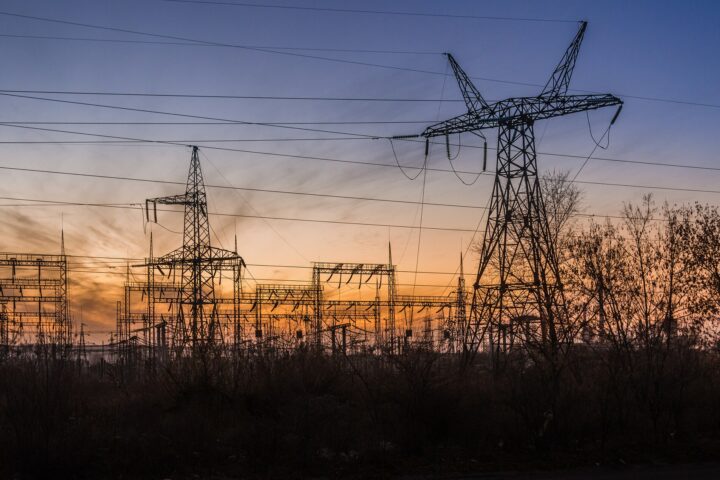
Lawmakers have faced mounting pressure to act as data centers strain the power grid, with some regions seeing power capacity demands spike more than 1,000%, according to Reuters.
The numbers tell a stark story. Overall U.S. electricity prices have climbed roughly 27% since 2019, far outpacing standard consumer inflation. States with heavy data center concentration have been hit especially hard, with electric bills surging well past the national average of 6% — Virginia saw a 13% jump, Illinois 16%, and Ohio 12%, all within just one year, according to CNBC.
Cost of living remains the number one issue on voters’ minds heading into the 2026 midterms, and data center construction has only accelerated the pressure, rising 57% between July 2025 and July of this year.
House leadership had been reluctant to bring the bill to a vote before the midterms, wary of the political minefield surrounding data centers. But House Majority Leader Steve Scalise pushed back on the idea that data centers are purely a burden, pointing to Meta’s $50 billion data center project in Louisiana, which he says generated enough tax revenue for every teacher in Richland Parish to receive a $50,000 bonus, according to Politico.
“There are tremendous benefits for communities who embrace data centers … They’re good customers, they’re good neighbors and studies prove that they don’t add to the cost of the grid,” Scalise said. “They’re paying their own way.”
The bill was led by an unlikely pairing — Republican Colorado Rep. Gabe Evans and Democratic Florida Rep. Kathy Castor — and drew broad support with 35 Republican and 7 Democrat co-sponsors, according to Congress.gov.
House Minority Leader Hakeem Jeffries praised the legislation as “an appropriate step forward” during a Monday press conference.
The bill now heads to the Senate, where Republican Ohio Sen. Jon Husted is leading the charge, though it has not yet come up for a vote there. The legislation previously cleared the House Energy and Commerce Committee unanimously back in July.
“I’m encouraged by the momentum behind the Ratepayer Protection Act, and I’m hopeful we’ll see it come to the floor when Congress returns in September,” Evans told Politico in August.
The push for reform comes as natural gas consumption tied to powering U.S. data centers is projected to increase by 15 billion cubic feet per day through 2035 — putting America on track to burn through more natural gas for data centers than nearly any other nation on Earth.
Adding urgency to the debate, a New Jersey data center spilled an estimated 5,000 gallons of diesel fuel into a nearby creek just last Friday.
[READ MORE: Michigan Democrat El-Sayed Distances Himself From Streamer Hasan Piker’s al-Qaeda Comparison]